
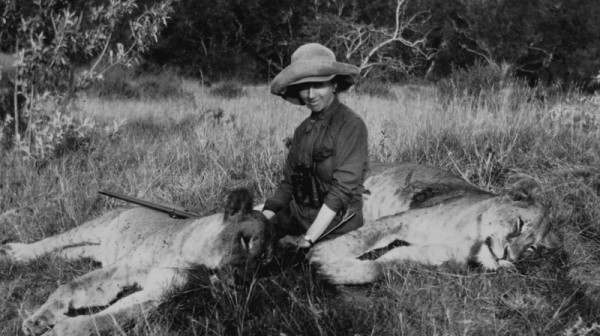
Women hunters have always been part of hunting history, even if their role has often remained hidden behind male-dominated narratives. From Artemis and Diana, the ancient goddesses of the hunt, to powerful queens, rebellious forest women, aristocratic huntresses, travelers and writers such as Karen Blixen and Gertrude Bell, female hunting has represented much more than a practical activity. It has been a symbol of freedom, courage, independence, cultural identity and deep connection with the wild. The history of women hunters reveals a fascinating legacy made of mythology, power, resistance and respect for nature, a legacy that continues today in the growing presence of women in the hunting world.
An exclusive hunting and cultural journey in Italy
Women hunters in history: a forgotten legacy of freedom, courage and wilderness
There is a path in the forest, hidden among the ferns and low branches, that tells a story as old as the world. It is the path of the women hunters.
A tale of proud sovereigns, untamable goddesses, silent rebels, and Amazons swift as the wind. A story few know, but one that deserves to be heard.
When we think of hunting in history, we almost always imagine a male-dominated world: kings and nobles, hunters with rifles or bows, packs of dogs in tow, trophies to display. But if we dig into our collective memory, through the folds of history and the margins of official records, another figure emerges: that of the woman hunter.
A figure rooted in mythology, blossoming in Renaissance courts, riding through the woods of the 19th century, and emerging—free and proud—in the 20th. A journey marked by courage, elegance, and a passion for nature. A story of freedom, defiance, and a deep connection with the wild.
The Goddesses of the Hunt: From Artemis to Diana
The journey begins long before historical records. In Greek mythology, hunting is a divine, feminine, and wild domain ruled by Artemis, goddess of the moon and the forests. With her silver bow always at the ready, surrounded by nymphs and animals, Artemis embodies absolute freedom. She knows no bounds, rejects the rules of men, protects the young and the innocent, yet does not hesitate to punish those who violate the purity of her world.


And then there are them—the writers, the artists, the travelers. Women who turned hunting into a poetic act, a declaration of identity, a bridge between culture and instinct. Not hunters out of necessity, but by choice—drawn by a love for the wild, for silence, for the delicate balance that only unspoiled landscapes can offer.
Two names shine brighter than most: Karen Blixen and Gertrude Bell. Women with vastly different styles and life paths, yet united by a shared vision: hunting as a path to freedom, a deep connection with the untamed world, and a form of personal expression.
Karen Blixen: The Voice of the Savanna
Karen Blixen, a Danish writer, lived in Kenya for nearly twenty years, from 1914 to 1931. In her most famous work, Out of Africa, she recounted with haunting sensitivity the beauty and harshness of life in the Rift Valley, on a coffee plantation at the foot of the Ngong Hills.
Beyond managing the plantation and building meaningful relationships with local communities, Blixen lived in close harmony with African nature—observing it, loving it, and—yes—hunting it. She did so alongside the man she loved for her entire life, Denys Finch Hatton, a British pilot, explorer, and hunter with a restless spirit.
But for Karen, hunting was never a mere predatory act: it was ritual, aesthetics, narrative tension—an integral part of life in the savannah. She wrote about hunting in lyrical tones, speaking of the nobility of wild animals, the precision required in every gesture, and the profound respect owed to the prey. In her words, the huntress is never arrogant: she is part of the balance, a guardian of the landscape, an enchanted observer and, when necessary, a conscious predator.
Her stories convey a sense of suspended time, typical of the great African hunts: a long, silent wait, broken only by the sounds of the wind and birds. And when the shot is fired, it is done with measure, with respect, with melancholy.
Gertrude Bell: the Desert Huntress
Far more rugged and militant was Gertrude Bell, a true pioneer of archaeology, geopolitics, and British diplomacy in the Middle East. Born in 1868 into an upper-class industrial family in England, Bell was one of the first women to graduate from Oxford. Soon after, she began traveling alone, armed with notebooks, maps, and often a hunting rifle.
She crossed the deserts of Syria, Iraq, and the Arabian Peninsula, sleeping in Bedouin tents, studying ancient ruins, and drawing maps that would later be used by the British Empire to redraw the borders of the Middle East.
In these harsh lands, where few European women dared to set foot, Gertrude earned the respect of local tribes not only through her intelligence and diplomacy but also through her skill in riding and handling weapons. She often hunted out of necessity, gazelles, birds, hares, but also to share with her hosts the ancient ritual of a meal earned by one’s own hands, a gesture that helped her be accepted as an equal.
For her, hunting was part of cultural negotiation: a way to demonstrate adaptability, strength, and knowledge of the land. Even in her diaries, there’s a palpable sense of respect for the natural world—but filtered through the gaze of a pragmatic explorer, a woman who—during the Victorian era—managed to carve out a space for herself in a world where only men were expected to speak.
She was nicknamed “the Queen of the Desert”, and her figure inspired films, novels, and essays. She was a woman who spoke Arabic, wrote letters to Winston Churchill, and moved through the dunes with the same ease with which she leafed through an ancient manuscript.
For her, hunting was part of a life of action, discovery, and total immersion in an “other” world, one to be understood and respected. A direct bond with a vast and indifferent landscape, where survival meant adapting, observing, and moving with precision. Exactly as every good hunter does.
Two Faces, One Same Freedom
Blixen and Bell. Two profoundly different women—one a poet of the landscape, the other an explorer of the unknown—yet united by an intimate and personal vision of hunting. Not a spectacle, nor a trophy, but a gesture of immersion, of silence, of connection with the land and with themselves.
Their stories offer us a feminine dimension of hunting, made of intelligence, balance, beauty, and strength. And they remind us that every woman hunter carries within her an ancient legacy—one that today can be rediscovered and told without fear, with respect and admiration.
Today: A Legacy That Still Walks the Woods
Today, the presence of women in the hunting world is steadily growing. Women who are no longer content to remain spectators, but live the forest, the dog, the plains, and the mountains with the same intensity, care, and respect as men. Women who know the language of the wild, who follow tracks with patience, who engage with nature without needing to ask for permission.
Women who are rediscovering a primordial bond—between body, breath, landscape, and instinct. Because hunting, when lived with awareness, is also this: a practice of deep listening, a form of presence, a test of freedom.

The path of women who hunt has long been obscured by the leaves of prejudice, but now it is becoming visible once again. It is a story made of goddesses and queens, rebels and amazons, rifles and silences. A story to be told, honored, and passed down.
Because, in the heart of the forest, femininity and the wild meet, and together they write one of the most fascinating chapters in the history of hunting.
FAQ
Were there women hunters in history?
Yes. Women hunters have existed throughout history, although their stories were often less documented than those of men. They appear in mythology, royal courts, folklore, aristocratic hunting traditions, exploration narratives and modern hunting culture.
Who was the goddess of the hunt?
In Greek mythology, Artemis was the goddess of the hunt, the moon, wild animals and forests. Her Roman counterpart was Diana, another powerful female figure associated with hunting, independence and the natural world.
Why are Artemis and Diana important in the history of women hunters?
Artemis and Diana are important because they represent one of the oldest symbolic links between femininity and hunting. They show that, in ancient imagination, the hunt was not only a male domain but also a sacred feminine space connected with freedom, nature and protection.
Did queens and noblewomen hunt?
Yes. Many queens and noblewomen took part in hunting. Figures such as Catherine de’ Medici, Marie Antoinette and Elizabeth I are remembered for their connection with hunting, riding, falconry or deer hunts, often using these activities as expressions of power, elegance and authority.
Was Catherine de’ Medici a hunter?
Catherine de’ Medici is often described as an accomplished huntress. In the context of Renaissance court life, hunting was not only leisure but also a political, social and symbolic activity linked to prestige and control of the landscape.
Did Marie Antoinette hunt?
Marie Antoinette is historically associated with the hunting culture of Versailles. Like many aristocratic women of her time, she participated in hunting as part of court life, where riding and field sports were connected with status, identity and social presence.
Did Elizabeth I enjoy hunting?
Elizabeth I is often linked to hunting, hawking and outdoor courtly activities. For a powerful female ruler, hunting was also a way to project authority, discipline and sovereign control in a world dominated by male political symbols.
Were women hunters only aristocrats?
No. Women hunters were not only queens and noblewomen. Folklore, rural history and popular traditions also speak of women who hunted out of necessity, survival, rebellion or independence, especially in forests, mountains and marginal territories.
What role did women hunters play in folklore?
In folklore, women hunters often appear as wild, independent or mysterious figures. They may be described as forest women, rebels, healers, outlaws or guardians of nature, capable of living beyond the limits imposed by society.
Who was Karen Blixen and why is she important for hunting history?
Karen Blixen was a Danish writer who lived in Kenya and wrote about African landscapes, wildlife and the human relationship with nature. In her vision, hunting was not simply a trophy pursuit, but a ritual, aesthetic and emotional experience connected with respect for the wild.
Was Gertrude Bell a hunter?
Gertrude Bell was an explorer, archaeologist, diplomat and traveler in the Middle East. During her journeys, hunting was part of her experience of desert life, survival, cultural exchange and adaptation to landscapes where knowledge of nature was essential.
How did women use hunting as a form of freedom?
For many women, hunting represented freedom because it allowed them to enter spaces traditionally reserved for men: forests, mountains, deserts, courts, expeditions and wild landscapes. It became a way to express independence, courage and personal identity.
Are there more women hunters today?
Yes. The presence of women in hunting is growing in many countries. Today, women participate in hunting not as exceptions, but as skilled, conscious and responsible hunters, often bringing strong attention to ethics, conservation and respect for nature.
Why is the history of women hunters important?
The history of women hunters is important because it challenges the idea that hunting has always been exclusively male. It reveals a richer tradition in which women appear as goddesses, queens, rebels, writers, explorers and modern hunters.
What does the female hunting tradition teach us today?
The female hunting tradition teaches that hunting can be understood as knowledge, discipline, presence and relationship with nature. It reminds us that the forest has always belonged not only to men, but also to women who knew how to read its signs, respect its silences and move within it with courage.