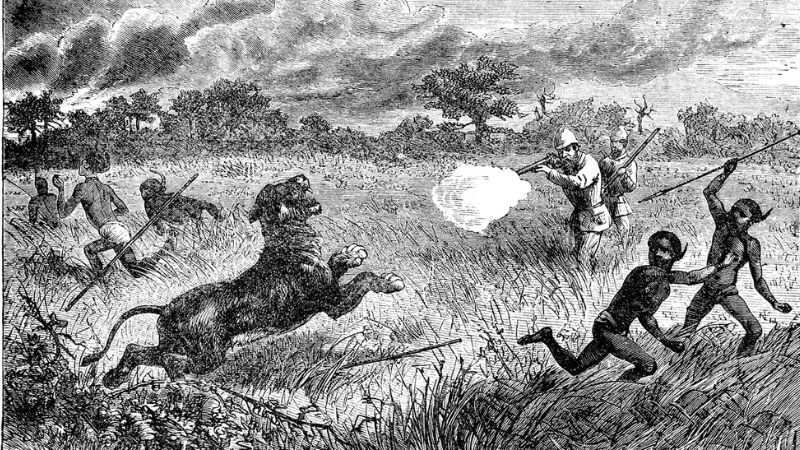

Africa’s plains game is not simply a hunting destination, but a world shaped by wind, light, distance, and the ability to read the land. Through Botswana, Namibia, Zimbabwe, and South Africa, this article explores the real differences between habitats, hunting techniques, and iconic species such as kudu, gemsbok, wildebeest, eland, impala, and springbok. From glassing in the Kalahari to tracking through mopane bush, plains game emerges as a discipline that shapes the hunter through patience, precision, and ethics. The article also examines practical approaches, shooting sticks, wind management, caliber selection, and the importance of premium ammunition, showing how every detail can influence the final outcome. More than just an “introductory hunt,” plains game represents the authentic heart of the African hunting experience: a school of technique, emotional control, and respect for the environment. A journey designed for those who truly want to understand hunting Africa beyond stereotypes and postcard images.
If you want to understand Africa, don’t start from the myth. Start from the step.
Not from the lion told in books, but from the light shadow of a kudu crossing the bush without a sound. Not from the elephant photographed from afar, but from the way the springbok stiffens at two hundred meters, as if it has read your thoughts before it even sees your body.
I have been a PH long enough to have seen Africa change and, at the same time, remain exactly the same. Tracks open and close, lodges improve, pickup trucks become more comfortable, optics become brighter, clients become more informed. But then, when you step out of the vehicle, when you put your foot on the ground and feel the dust getting into the seams of your boots, everything returns to what it always was: Africa is wind, light, and distance. And plains game hunting is the mother tongue of this continent.
This article on “Africa Plains Game” is not a simple post. It is an atlas, a way to navigate Botswana, Namibia, Zimbabwe, and South Africa not as brochure destinations, but as hunting worlds with their own rules. It is also the best gateway for anyone who dreams of Africa and wants to approach it intelligently: understanding what truly changes between an oryx and a kudu, between a shot from sticks in mopane bush and a stalk across Namibian gravel, between an afternoon of glassing in the Kalahari and a morning of tracking in Zimbabwe.
That is why an article like this matters: it brings you into Africa without letting you get lost. It makes you understand that there is no such thing as “African hunting”, but many Africas. And that plains game is not “easy hunting” before dangerous game hunting: it is, on the contrary, the hunting that shapes the hunter. The one that teaches you to be light, patient, precise. The one that often gives you the purest emotions.
Plains game: not a list of animals, but a discipline
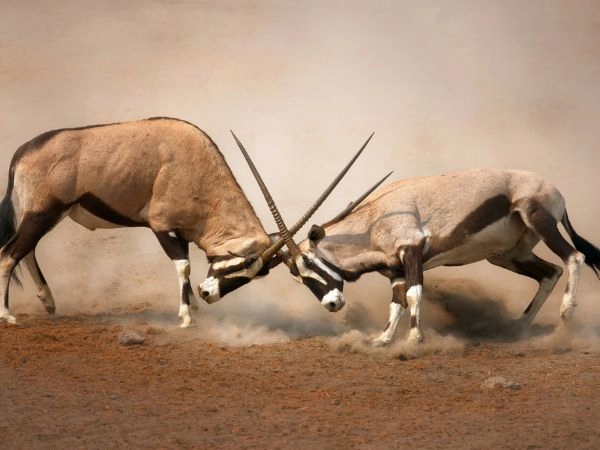
When a client asks me: “How many species can I do in a week?”, I immediately understand whether I will have to work more on technique or on mindset. Because plains game is not a collection of figurines. It is a system of balances: species, habitat, wind, light, terrain, hunting pressure, season. And then there is man: his breathing, his impatience, his ability to wait.
Plains game is hunting where the environment is in control. It never gives you the same scenario twice. Today the wind is steady, tomorrow it shifts. Today the light is flat, tomorrow it cuts everything in half and every shadow becomes a weapon. Today the animals graze calmly, tomorrow they are nervous because they have heard lions or because a distant storm has put them on edge.
And then there is something non-experts always underestimate: the variety within plains game means variety in anatomy and reaction to the shot. An impala is not a wildebeest. A kudu is not a gemsbok. An eland is not a zebra. Thickness, angles, muscle density, post-hit behavior all change. A serious PH does not tell you “aim for the shoulder” like a universal mantra: he explains why, he corrects how, and he stops you when it is not the right moment.
Why an “Africa plains game” article is truly useful
Cross-region understanding: you don’t read a single story, you move through multiple territories and learn real differences.
Comparison learning: you understand that the same species in two different countries can become a completely different experience.
Technical progression: you move from environmental understanding to practical skills: how you move, how you position on sticks, how you use light, how you prepare your rifle.
A hunter who reads something like this arrives in Africa already with something valuable: a mental map. And a mental map reduces mistakes, increases the quality of the experience, and—most importantly—it improves ethics. Because those who truly understand what they are doing are also those who respect it more.
Four countries, four Africas: what really changes
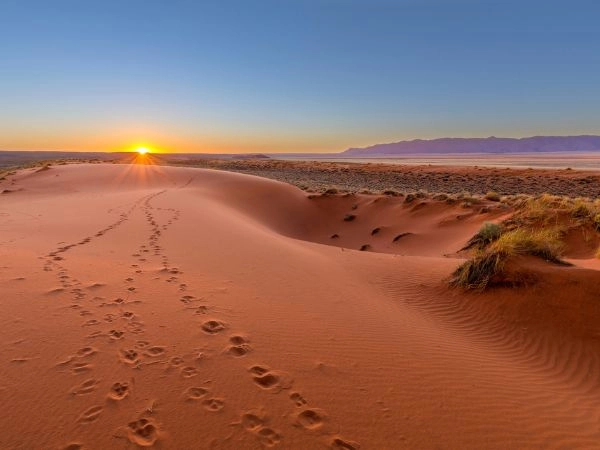
Botswana: the hunting of air and horizon
In Botswana, the first thing you learn is distance. Not only ballistic distance: psychological distance. Here the spaces are wide, the sky is enormous, and animals always seem “far enough” to keep you out.
The Kalahari and open bush areas require glassing, patience, and intelligent use of terrain.
In Botswana plains game you learn:
- to move less and observe more
- to read thermals and air currents like invisible roads
- to use depressions, tall grass, and small rises
- that springbok see before you do, and that an eland, once it decides to leave, is gone forever
It is a “clean” Africa, where every mistake is visible. Perfect for technical shooting, but attention: “technical” does not mean “long-range”. It means controlled. A good PH will never let you take a shot beyond what you can manage with certainty. In Botswana, a forced shot is not just a missed opportunity: it is a broken dream.
Namibia: the hunting of harsh light
Namibia is a blade. It cuts illusions.
Namibian light does not forgive: it outlines you, isolates you, exposes you. The terrain is often hard, rocky, noisy. Distances feel shorter than they are. Dry air distorts perception.
Here plains game becomes an advanced course in:
- slow, zig-zag stalking to stay out of sight
- managing shadows as if they were walls
- using bipods or low sticks when possible
- shooting animals that are always alert and rarely offer “perfect textbook” positions
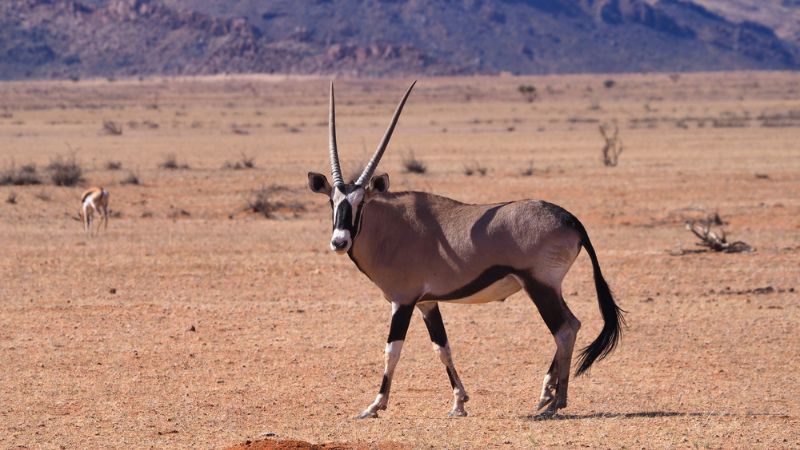
The oryx (gemsbok) in Namibia is an animal that deserves respect: tough, resilient, with anatomy that requires proper penetration. The springbok is pure nervous energy. The kudu, when you finally see it clearly, feels like an apparition: tall, elegant, and yet capable of disappearing in three steps.
Zimbabwe: plains game that looks you in the eyes
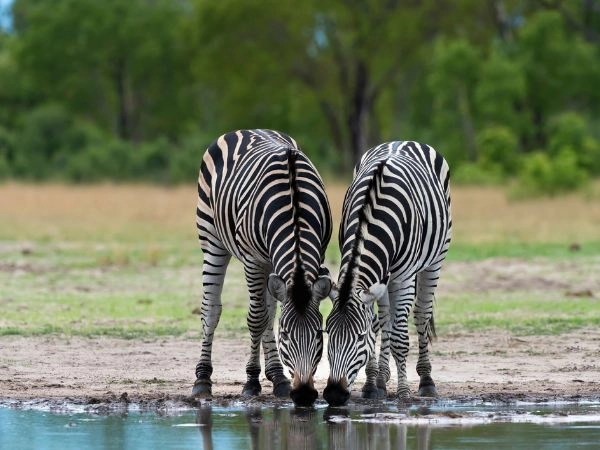
If you want the Africa you feel in your chest, go to Zimbabwe.
Here the bush is thick, mopane creates walls, tracks are a language, and plains game lives in an environment where predators are real. This changes everything: the animal is never truly relaxed.
In Zimbabwe you learn that:
- tracking is not romance: it is strategy
- close approach is normal, but never safe
- shot angles must be chosen with cold precision
- a wounded wildebeest can behave unpredictably
- a kudu in mopane is a ghost
And then there is the part that makes you dream: sound. In Zimbabwe you hear Africa. Not just see it. You hear it: francolins, monkeys, wind moving hard leaves, the call of a sentinel bird changing tone to signal danger.
When tracking closes and you realize the animal is close, your heart makes a sound too loud for that silence.
South Africa: intelligent variety
South Africa is often misrepresented: either as “too easy” or “too managed”. The truth is that South Africa is a continent within a continent.
If chosen correctly, it offers a complete plains game experience: different environments, numerous species, and the ability to build a tailored journey.
South Africa is ideal for:
- first well-structured hunting trips
- technical refinement (sticks shooting, angle reading)
- smart combinations of species and habitats
- precision work with medium calibers without needing excessive power
A good PH here does not make you “chase numbers”. He builds experience. He makes you understand the difference between an impala in open terrain and a nyala in thick cover, between a zebra watching you and a hartebeest challenging you at distance.
Species and technique: the real lesson of plains game
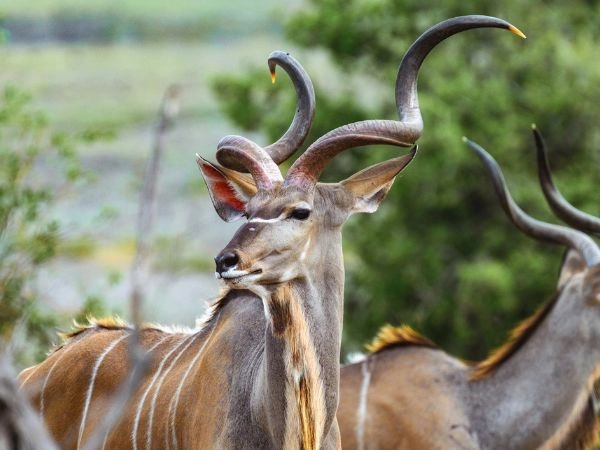
Kudu: the lord of the bush
You do not hunt kudu by “finding it”. You earn it.
It uses terrain intelligently. It does not panic: it evades. If pressured, it shows only its rear and disappears.
Technique: glassing + long approach + clean shot when the vital zone finally appears.
Gemsbok (oryx): precision and penetration
It is tough. Very tough.
It requires a well-placed shot and a bullet that performs properly. The gemsbok teaches that ethics begins with the first shot.
Wildebeest: the “bull” spirit of plains game
The blue wildebeest is often called the “poor man’s buffalo”. Not because it is small, but because it is resilient, tough, and sometimes surprisingly strong in reaction.
Technique: avoid uncertain shots, use a setup that ensures penetration, and be ready for a second shot if needed.
Eland: the gentle giant that does not forgive carelessness
The eland is huge. Yet it moves with surprising grace. A bad shot on an eland means hours of tracking. It requires maturity.
Impala and springbok: nerves, vision, speed
These species teach time management. A usable shooting window may last two seconds. You need calm. Stability on sticks. And the ability to say “no” when it is not perfect.
PH tips & tricks: what makes the difference
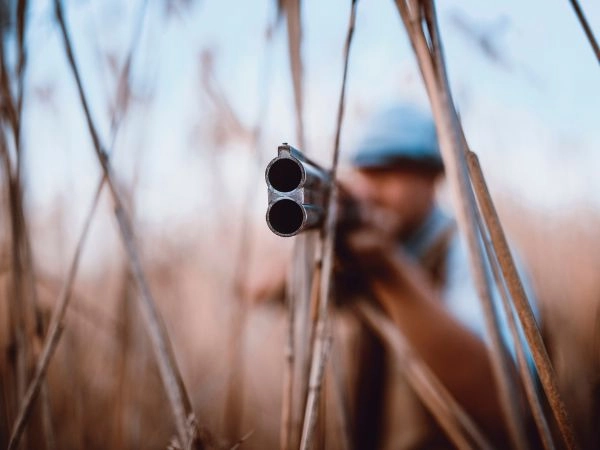
Wind: your real schedule
In Africa, you don’t plan by time—you plan by wind.
The wind decides where you go, how you move, and how much risk you take. Whenever I see a client ignore wind, I know I will have to save him from himself.
Rule: if you feel wind on your neck, you are not comfortable—you are exposed.
Sticks: train like a range, but with real pressure
Train at home, but simulate:
- short time limits
- elevated heart rate
- imperfect positioning
- fast aim and controlled release
Stability is mental as much as physical.
Optics: simple and bright
You need reliable, bright optics—not complex ones. A complicated reticle can cost you time. And sometimes, two seconds is everything.
Calibers: “enough” is better than “too much”
Good general choices:
- .308 / .30-06 for accurate shooters
- 7mm Rem Mag for versatility
- .300 Win Mag for heavier species, if recoil is manageable
The truth: the best caliber is the one you shoot best when the PH says “now”.
Ammunition: premium, always
On plains game, bullet quality matters in penetration, recovery, animal reaction, and distance traveled after impact.
A premium bullet is not luxury: it is responsibility.
Position and breathing: the shot starts before the trigger
I always watch the hunter before the shot: shoulders, neck, jaw. If you are rigid, you will miss. If you breathe poorly, you will rush. If you think about the trophy, you will lose focus.
The trick is simple and extremely difficult: think about the point, not the animal.
Emotion: why plains game is more powerful than you think
Many arrive in Africa with an image: savannah, sun, adventure. But real emotion is different.
It is when you walk in line with trackers and realize the ground tells a story from the night before.
It is when you see a kudu between two trees and, for a moment, it is just an illusion before becoming real.
It is when the wind shifts and everyone stops at once, without words, as if the bush has commanded silence.
It is when, after hours, you finally get the window and hear the PH behind you whisper: “Ok. Take it.”
In that moment, the world narrows: reticle, shoulder, breath.
And then, if you do everything right, Africa gives you a gift: not a trophy, but a living memory.
And that memory—spoken from a PH who has seen grown men quietly emotional—is often more important than any measurement in inches.
Why an “Africa plains game” hub is the best entry point into hunting Africa
An “Africa Plains Game” concept is useful because it does not sell you a dream: it teaches you how to dream properly.
It makes you understand that:
- each country is a different character
- each species is a different lesson
- technique is the bridge between desire and reality
- emotion comes from competence, not improvisation
If you want Africa, choose plains game not as a “beginning”, but as the core.
That is where you truly learn to walk.
That is where you fall in love with the wind.
That is where you understand why some men return every year and can no longer explain why.
Because it is not a reason.
It is a call.