

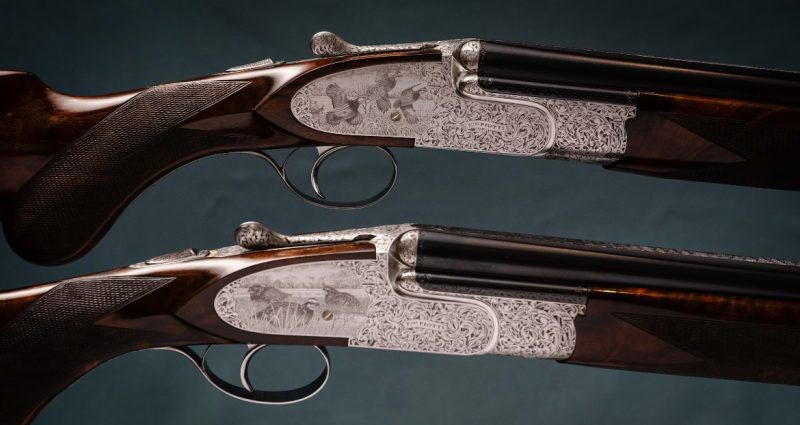
Holland & Holland is one of the most iconic luxury gunmakers in the world, a London house whose history has shaped the culture of fine hunting firearms since 1835. Founded by Harris Holland and later developed into a symbol of “London Best” craftsmanship, the brand became legendary through its Royal sidelock shotguns, assisted-opening systems, detachable locks, Paradox guns and celebrated cartridges such as the .375 H&H Magnum and .300 H&H Magnum. From Victorian sporting tradition to the modern Beretta era, Holland & Holland represents far more than technical excellence: it embodies heritage, bespoke artistry, field performance and the timeless elegance of responsible hunting culture.
Discover a refined hunting and cultural journey in Italy
Holland & Holland: the London gunmaker that turned hunting firearms into timeless luxury
Holland & Holland is not simply a gunmaker. It is one of the great names through which the history of British hunting, aristocratic sport and bespoke craftsmanship can be read. Founded in London in 1835 by Harris Holland, the company grew from a Victorian sporting house into a world-renowned symbol of precision, elegance and exclusivity. Its shotguns and rifles were never conceived as ordinary tools, but as refined instruments made for hunters who understood that balance, handling, reliability and beauty are all part of the same field experience.
The power of the Holland & Holland name lies in its ability to unite innovation and tradition. The Royal sidelock, the assisted-opening mechanism, the detachable sidelock, the Paradox gun and legendary cartridges such as the .375 H&H Magnum helped define the standards of luxury sporting firearms. These creations were admired not only for their technical qualities, but because they expressed a very precise idea of hunting: disciplined, elegant, demanding and deeply rooted in heritage.
Today, under the ownership of Beretta Holding, Holland & Holland continues to preserve its English identity while benefiting from the strength of one of the oldest and most respected names in Italian gunmaking. Its London factory, Mayfair presence and West London Shooting Grounds keep alive a culture where the firearm is not only an object of performance, but a work of craftsmanship, memory and personal identity. For hunters and collectors, Holland & Holland remains a bridge between the golden age of British sport and the future of bespoke luxury hunting.
In the heart of London’s bustling streets, where tradition meets timeless craftsmanship, stands Holland & Holland, a name synonymous with excellence in luxury firearms.
For nearly two centuries, this esteemed gunmaker has crafted some of the world’s finest shotguns and rifles, blending British heritage with innovative design. As we delve into the Holland & Holland history, we’ll uncover the journey of London’s premier gunmakers, whose creations have graced the hands of royalty, adventurers, and discerning hunters worldwide.
Whether you’re an aficionado of UK heritage or an Italian hunting enthusiast drawn to the artistry of bespoke weapons, the legacy of Holland & Holland offers a captivating blend of precision engineering and cultural significance.
Founded in 1835, Holland & Holland emerged during the Victorian era, a time when Britain’s imperial reach fueled a passion for sporting pursuits. This story begins with Harris Holland, a savvy tobacco merchant born in 1806, whose love for shooting propelled him into the world of gunmaking.
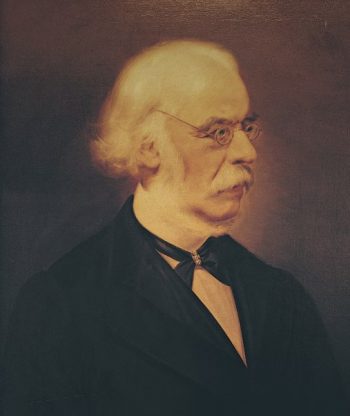 Initially operating from his tobacco wholesale business, Harris began producing firearms around the 1850s, leveraging his reputation as a skilled marksman to attract clientele. Unlike many contemporaries who traced their roots to apprenticeships under legendary figures like Joseph Manton, Harris carved his path independently, focusing on quality and innovation from the outset.
His early guns were likely outsourced, but as demand grew, he established a dedicated workshop in London, setting the foundation for what would become a global icon in luxury firearms.
The company’s evolution took a pivotal turn in 1861 when Harris invited his nephew, Henry Holland, to join as an apprentice. Henry, sharing his uncle’s enthusiasm for shooting, brought fresh energy and technical prowess to the firm. By 1876, with Henry ascending to full partnership, the business was officially renamed Holland & Holland, a moniker that would echo through the annals of gunmaking history.
Harris retained control until his death in 1896, but it was under this duo that the company began to distinguish itself among London gunmakers. Their emphasis on handmade craftsmanship, using the finest materials like Turkish walnut for stocks and intricate engravings, quickly elevated Holland & Holland above the competition.
Those who want to experience the brand beyond its history can discover the Holland & Holland Shooting Academy, where instruction, gun fitting and shooting tradition meet in one of Britain’s most prestigious sporting settings.
Rise to Prominence: Trials, Triumphs, and Royal Recognition
The 1880s marked a golden era for Holland & Holland, as the company solidified its reputation through groundbreaking achievements. In 1883, The Field magazine, a leading authority on sporting arm, organized comprehensive rifle trials to test the best of British gunmaking. Holland & Holland entered firearms in all ten categories and emerged victorious in every single one, a feat that stunned the industry and set new benchmarks for accuracy, reliability, and design. This sweeping success not only boosted sales but also cemented the firm’s status as innovators, drawing attention from nobility and sportsmen across the empire.
Building on this momentum, Holland & Holland introduced the “Royal” model in 1885, a side-by-side sidelock shotgun that became their flagship offering. Patented that same year, the Royal was celebrated for its sleek lines, balanced feel, and mechanical precision, often customized to fit the owner like a bespoke suit.
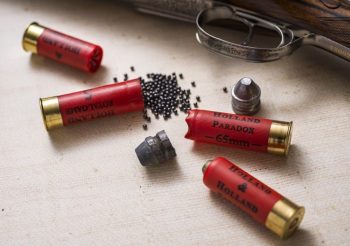
The Paradox gun, also patented in 1885, was another stroke of genius: its unique rifling in the last few inches of the barrel allowed shooters to fire both shot and ball with remarkable accuracy, ideal for hunters transitioning between birds and big game without swapping weapons.
These innovations reflected the company’s forward-thinking approach, blending functionality with elegance, a hallmark that appealed to UK heritage enthusiasts and international hunters alike.
For international hunters travelling with their own shotguns or rifles, Montefeltro also provides firearm assistance and hunting services in Italy, including cartridges, ammunition advice, gun maintenance, visitor permits, instructors and on-field support.
By the late 19th century
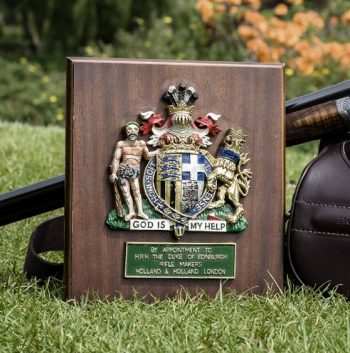 Holland & Holland had earned royal patronage, supplying firearms to the British monarchy and aristocracy. Their connection to the crown deepened over time, culminating in a Royal Warrant from the Prince of Wales (now King Charles) and previously from Prince Philip, Duke of Edinburgh. This endorsement underscored their role in preserving British traditions of field sports, where precision firearms were essential for grouse shoots on Scottish moors or safaris in colonial territories. For Italian hunting enthusiasts, who value the artistry of brands like Beretta, Holland & Holland’s story resonates as a bridge between English precision and Mediterranean passion for the hunt, especially given recent ownership ties.
Innovations That Shaped the Industry
Holland & Holland’s legacy is deeply intertwined with pioneering advancements that revolutionized luxury firearms. Henry Holland, a prolific inventor, secured over 50 patents during his tenure, driving the company’s technical edge. In 1908, they patented the detachable lock for sidelock shotguns, a feature that simplified maintenance while preserving the gun’s performance and aesthetic integrity. This innovation made their weapons more user-friendly for avid sportsmen, who could now service their firearms without compromising craftsmanship.
The 1912 introduction of the .375 H&H Magnum cartridge was a game-changer for big-game hunting. Designed with a belted case for enhanced strength under pressure, it offered unmatched stopping power and reliability, becoming a staple for safaris in Africa and beyond. Even today, over a century later, this caliber remains favored by hunters for its versatility and precision, embodying Holland & Holland’s commitment to enduring quality.
In 1922, the firm patented the assisted-opening mechanism for the Royal sidelock shotgun, further refining the user experience with smoother action and reduced effort. These developments influenced gunmakers worldwide, positioning Holland & Holland as leaders in the field. Their bespoke process, tailoring each firearm to the client’s specifications, from wood selection to engraving, ensured that every piece was not just a tool, but a work of art. Intricate scrollwork, often depicting hunting scenes, added a layer of personalization that appealed to collectors and practitioners alike.
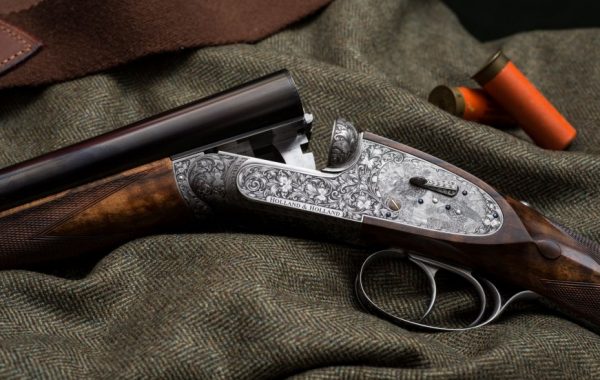
During the interwar period, Holland & Holland adapted to changing markets by introducing the Dominion-grade guns in the 1930s. These were more rugged models designed for use in British colonies, offering affordability without sacrificing durability—perfect for the harsh conditions of imperial outposts. This expansion broadened their appeal, attracting a diverse clientele from European nobility to adventurous explorers.
Navigating the 20th Century: Challenges and Expansions
The 20th century brought both triumphs and trials for Holland & Holland. Post-World War II, under the leadership of Malcolm Lyell, the company expanded its horizons, acquiring rare firearms from Indian princes and modernizing operations. The Holland family gradually relinquished control, paving the way for new ownership. In 1898, they had established a dedicated factory in London, which became a hub for craftsmanship, producing guns that combined traditional hand-finishing with emerging technologies.
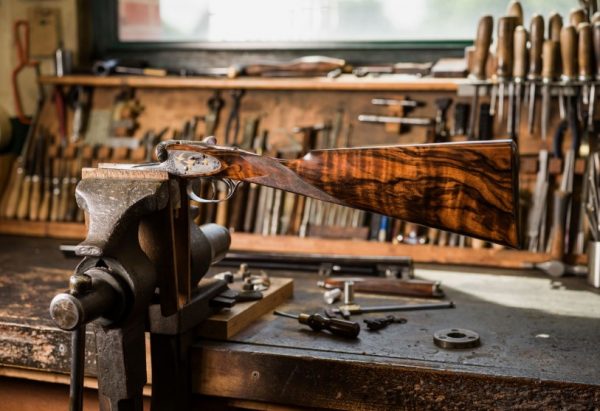
A significant shift occurred in 1989 when the luxury fashion house Chanel acquired the company. This era saw substantial investments in the factory, including renovations that preserved historical elements while incorporating modern machinery. However, the marriage of gunmaking with high fashion led to some identity challenges; critics noted that offerings like safari clothing seemed more suited to catwalks than the field, diluting the brand’s rugged authenticity. Despite this, Chanel’s stewardship maintained the core focus on bespoke firearms, with prices ranging from £60,000 to nearly £100,000 and wait times of 2-3 years.
The 1990s brought global outreach, with gunrooms opening in Dallas, Texas, and Moscow, though the New York location closed in 2017. The flagship store on Bruton Street in London’s Mayfair underwent renovations, reinforcing its status as a destination for luxury firearms enthusiasts. Holland & Holland also emphasized conservation, educating clients on sustainable hunting practices, a value that aligns with modern Italian hunting communities, where ethical pursuits in the Apennines mirror Britain’s field traditions.
The Modern Era: Acquisition by Beretta and a Bright Future
In 2021, Beretta Holding Group, the storied Italian gunmaker with roots dating back to 1526, acquired Holland & Holland, marking a new chapter that bridges British and Italian craftsmanship. This move was hailed as a natural fit, given Beretta’s admiration for the brand; Pietro Beretta had studied Holland & Holland in the 1930s. Under Beretta, the company has access to centuries of research, enhancing its innovation while preserving its English identity.
Today, Holland & Holland operates from its London factory, producing handmade shotguns and rifles that embody luxury and performance. The West London shooting grounds offer world-class instruction, fitting services, and exclusive events, attracting high-profile clients like Eric Clapton, Tom Selleck, and members of the royal family. Recent investments include factory upgrades, the launch of the “Noble” shotgun, and a revival of hunting apparel, all geared toward the brand’s 200th anniversary in 2035.
For Italian hunting enthusiasts, this acquisition creates exciting synergies. Beretta’s Italian heritage complements Holland & Holland’s British precision, offering a transcontinental appeal for those pursuing wild boar in Tuscany or pheasants in the English countryside. The shared emphasis on bespoke craftsmanship, where each gun is a testament to the maker’s skill, fosters a global community of connoisseurs.
Holland & Holland’s Enduring Appeal in Hunting Culture
Beyond its technical achievements, Holland & Holland represents a cultural touchstone in the world of hunting. In the UK, their firearms are integral to heritage events like the Glorious Twelfth, the start of grouse season, where tradition dictates the use of finely crafted guns. This resonates with Italian hunters, whose Montefeltro region, famed for its rolling hills and game, shares a similar reverence for artisanal weapons. The company’s focus on responsible hunting, including conservation initiatives, aligns with contemporary values, ensuring that luxury firearms serve not just as tools, but as stewards of the environment.
Collectors prize Holland & Holland pieces as heirlooms, often appreciating in value due to their rarity and artistry. A vintage Royal shotgun, for instance, might fetch astronomical prices at auction, blending investment with passion. For modern users, the brand’s ammunition heritage, including the .300 H&H Magnum from 1925, continues to deliver performance in diverse terrains.
A Legacy That Continues to Fire
The history of Holland & Holland is a tapestry of innovation, resilience, and unparalleled craftsmanship. From Harris Holland’s humble beginnings in 1835 to the Beretta era’s promising future, this London gunmaker has consistently pushed the boundaries of luxury firearms. As we look ahead, Holland & Holland remains a beacon of UK heritage, inviting Italian hunting enthusiasts and global sportsmen to partake in its timeless tradition. Whether you’re exploring the Bruton Street gunroom or testing a bespoke rifle at the shooting grounds, the essence of Holland & Holland endures: perfecting the art of shooting, one masterful creation at a time.
The legacy of Holland & Holland reminds us that a fine hunting firearm is never only a technical instrument. It is a cultural object, a work of craftsmanship and a symbol of a refined way of experiencing the field. This same spirit can be discovered in a refined hunting and cultural journey in Italy, where Montefeltro combines hunting, historic residences, Italian hospitality, fine cuisine and the extraordinary heritage of Beretta craftsmanship.