
Duck hunting in Italy is more than a sporting experience: it is an immersion into a world of timeless traditions, exclusive wetland landscapes, and understated elegance. From the renowned Po Valley to the refined atmosphere of the Venetian wetlands, Italy offers discerning waterfowl hunters the rare opportunity to combine authentic hunting culture with exceptional hospitality and bespoke travel. This guide explores where to hunt, what makes the Italian experience unique, and why Italy remains one of Europe’s most distinctive and sophisticated destinations for duck hunting.
- Best areas: Po Valley, Venetian wetlands
- Hunting style: Traditional duck hunting, wetland blinds, selected local methods
- Best for: International hunters, waterfowl enthusiasts, lovers of heritage hunting
- Experience type: Private or small-group guided experiences
- Season window: Autumn and winter, depending on regional hunting calendars
- Nearest airports: Milan, Venice, Bologna
- What makes it special: Historic hunting traditions, exclusive wetlands, bespoke organization
- Shot requirements: Non-toxic shot may be required depending on the hunting area and local regulations
- Ideal trip length: 2 to 4 hunting days
- Hospitality style: Tailor-made travel with refined accommodation and local expertise
Where to go duck hunting in Italy
Italy offers more than one face of duck hunting, but the finest experiences are found in two wetland worlds with very different personalities. The first is the Venetian lagoon-and-valley tradition, where water, reeds, embankments, fishing valleys, and historic lodges create a setting that feels both deeply rooted and unusually refined. The second is the broader Po Valley, where vast plains, rice fields, marshes, rivers, and managed wetlands form one of Europe’s most important landscapes for migratory waterfowl. Together, these two areas define the highest expression of duck hunting in Italy: one more intimate, elegant, and steeped in lagoon culture; the other broader, more open, and shaped by the great agricultural and wetland mosaic of northern Italy.
Venetian lagoon and valley duck hunting
For hunters seeking the most atmospheric and distinctive side of duck hunting in Italy, the wetlands of the Venetian lagoon world and the southern Venetian valley system should come first. Within this landscape, Valle Morosina, near Rosolina, stands out as the most evocative reference point: founded in 1670, owned by the noble Vianelli family of Chioggia since 1720, and extending across 787 hectares of wetlands inside the Po Delta Park, it represents exactly the kind of place international hunters imagine when they think of old Italian waterfowl culture translated into a modern, high-end experience.
Its position is part of its charm. The official Albarella material places the island in the municipality of Rosolina, between Chioggia and Comacchio, while the Delta itineraries explicitly direct visitors toward Valle Morosina when exploring the valleys of Rosolina. This makes the area especially appealing for a luxury hunting page: it combines the visual poetry of the northeastern lagoons with the practical advantage of being close to iconic places such as Chioggia and Isola di Albarella, a private island immersed in the Po Delta landscape.
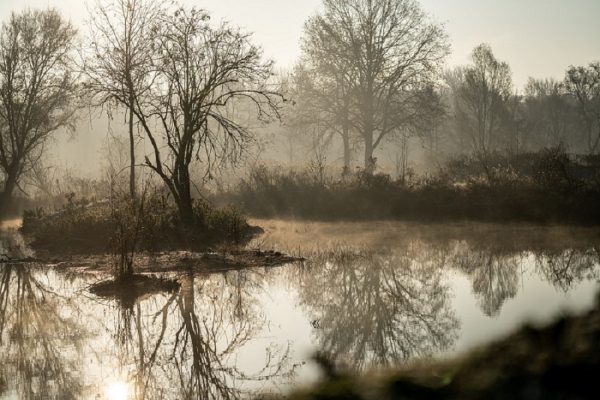
What makes this part of Italy so special is not only the presence of waterfowl, but the character of the habitat itself. Here, duck hunting unfolds among managed fishing valleys, reedbeds, canals, embankments, brackish and semi-brackish waters, and historic casoni, in an environment shaped over centuries by the relationship between man, water, and migratory birds. Even outside the hunting narrative, the official descriptions of the area emphasize biodiversity, wetland heritage, and the strong historical identity of these valleys, which is exactly why this setting feels so different from a standard marsh hunt elsewhere in Europe.
From a storytelling and positioning standpoint, Valle Morosina is the place where Italian duck hunting becomes truly distinctive. It offers the rare combination of heritage, wetland authenticity, and refined hospitality: a destination that speaks not only to committed waterfowl hunters, but also to travelers who value atmosphere, privacy, and cultural depth. On a page designed for an international audience, this is the section that should communicate that Italy is not simply another destination for ducks, but a place where waterfowl hunting can still feel elegant, rooted, and unmistakably local.
River Po valley duck hunting
If the Venetian valleys express the most intimate and heritage-driven side of the sport, the Po Valley represents the broader, more expansive geography of waterfowl hunting in Italy. Montefeltro’s own current page already describes it as one of the country’s prime duck hunting regions: a vast northern plain crossed by the Po River and defined by an extensive network of marshes, lakes, rivers, flooded woods, and rice fields, all of which create ideal habitat for migratory ducks. It is also positioned along major migration routes between northern Europe and Africa, which helps explain why the area has remained so important for generations of Italian waterfowl hunters.
Within this wider geography, areas such as Lomellina and the Pavia countryside give the Po Valley its practical hunting identity. Montefeltro already highlights the rice fields of Lomellina and the carefully managed reserve environment in the Pavia area as a setting for high-quality duck drives, where habitat, food availability, and organization come together in a highly structured experience. This side of duck hunting in Italy feels more open and strategic than the Venetian valleys: less about enclosed lagoon atmosphere, more about movement, migratory flow, agricultural landscapes, and the scale of the plains.
The appeal of the Po Valley is precisely this combination of scale and function. The flatlands and wetlands offer shelter, feeding grounds, and resting areas to a wide variety of ducks, while the deep-rooted hunting culture of the region gives the experience continuity and identity. For an international hunter, the Po Valley is where Italy reveals its more classic migratory waterfowl dimension: broad skies, long horizons, working wetlands, and the rhythm of a landscape where agriculture and birdlife have been intertwined for centuries.
Placed after the Venetian valleys, the Po Valley works perfectly as the second chapter of the page because it broadens the promise. It tells the reader that Italy can offer both a highly atmospheric lagoon-and-valley experience and a larger, migration-driven wetland hunt. In other words, Italy is not a one-style destination for duck hunters: it is a country where different wetland cultures produce different hunting emotions, and that richness is exactly what makes it so compelling in the eyes of a discerning international audience.

Secondly, its strategic geographical position: Positioned along crucial migratory routes, the Po Valley serves as a vital stopover for waterfowl during their seasonal migrations between northern Europe and Africa. This means a diverse array of duck species pass through this region, presenting hunters with abundant and varied hunting opportunities.
Furthermore, the abundance of food resources: The vast rice paddies and agricultural lands of the Po Valley offer rich nutrition for waterfowl, attracting them in large numbers during the migratory period. This abundance of food makes the Po Valley an ideal hunting ground for waterfowl enthusiasts.
And let’s not forget the rich hunting tradition: Duck hunting has a long and deeply rooted tradition in the region, with many hunters practicing this activity for generations. This hunting culture helps to keep the tradition alive and preserve the natural habitats of waterfowl.
The combination of ideal habitats, strategic geographical location, plentiful food resources, and a rich hunting tradition makes the Po Valley an exceptional destination for waterfowl hunting.
Find out how this duck hunting in Italy takes place!
Hunting organization
After a rich welcome breakfast we leave for the hide: twelve hunters are placed in strategic points behind a small barrier of reeds and in barrels, while the beaters move the ducks in the flooded woods.
In addition to the mallards, born free in the reserve, thousands of teals, wigeons, shovelers, and gadflies find the ideal habitat in this area where they are kept thanks to the continuous baiting with corn and thanks to the rice fields that surround it which provide an additional quality food portion.

To indicate the beginning and the end of the drive, the typical sound of the horn.
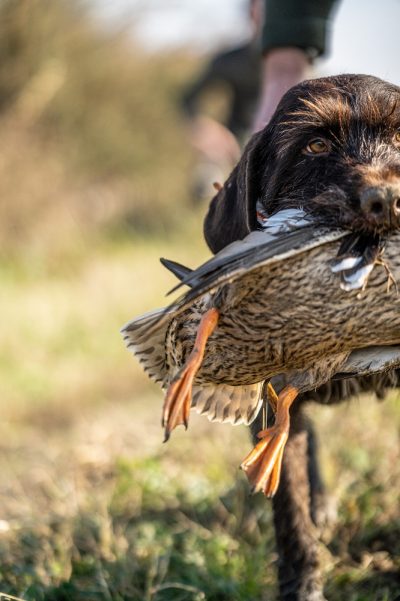
Between one drive and the next – usually 3 in a day – snacks are offered to allow the recovery of the felled animals and the preparation of the beaters in another area.
At the end of the last expedition, we return to the hunting lodge for lunch, served in the splendid eighteenth-century farmhouse recently renovated, among hunting trophies and taxidermized ducks.

Ducks species in Italy
In the Italian Po Valley, a vast region of great importance for waterfowl hunting, several species of ducks are huntable. Among these, some of the most common include:
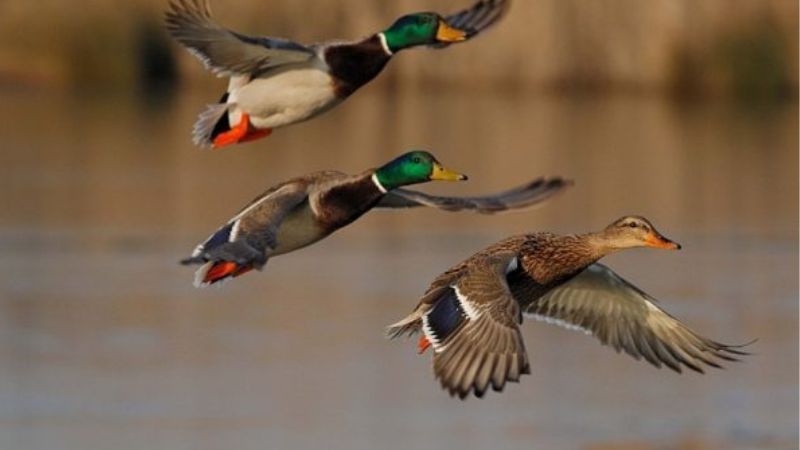
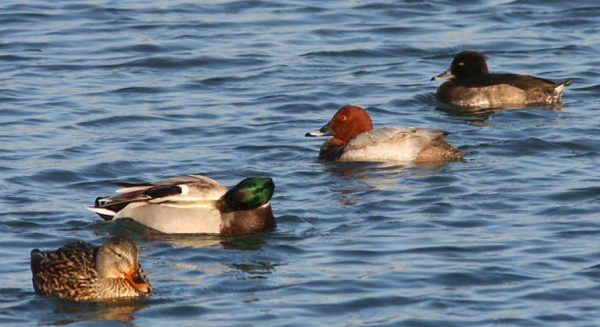
- Mallard (Anas platyrhynchos): Arguably one of the most well-known and widespread species, the mallard is abundant in the wetlands of the Po Valley. It exhibits a colorful and conspicuous male plumage during the breeding season.
- Teal (Anas crecca): A smaller-sized duck compared to the mallard, the teal is found throughout Italy and is a common prey for hunters in the Po Valley.
- Common pochard (Aythya ferina): A rather large duck, the common pochard is a coveted prey for many hunters. It is commonly found in the marshes and lakes of the Po Valley during the migratory season.
- Ferruginous duck (Aythya nyroca): Also known as the ferruginous pochard, this duck is a protected species but can be hunted during the regulated hunting season. Its presence in the Po Valley is significant.
- Gadwall (Anas strepera): This medium-sized duck is often found in the wetlands of the Po Valley, offering an interesting challenge to hunters.
These are just a few of the huntable duck species found in the Italian Po Valley.
Weapons and ammunitions used for Waterfowl hunting
Waterfowl hunting is a popular and thrilling pursuit that requires the right equipment to ensure both success and safety. The choice of weapons and ammunition plays a crucial role in the effectiveness and enjoyment of the hunt. Here, we delve into the recommended firearms and ammunition for waterfowl hunting, detailing their advantages and the regulations that enhance the hunting experience.
For duck hunting in Italy, the following types of shotguns are commonly recommended:
Semi-Automatic Shotguns: Semi-automatic shotguns are favored by many hunters due to their ability to fire multiple shots quickly with minimal recoil. This is particularly useful in waterfowl hunting, where birds often appear in flocks and swift follow-up shots can increase the chances of a successful hunt. The semi-automatic action also helps in maintaining focus on the target without the need to manually reload after each shot.
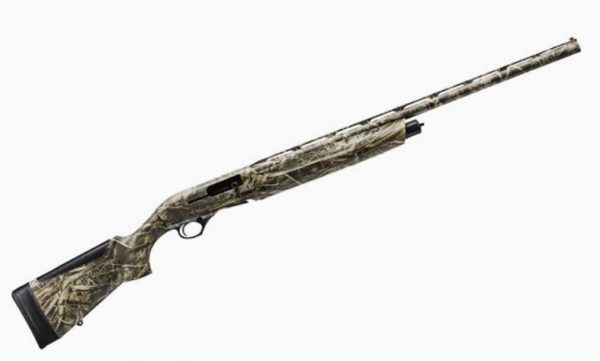
A300 Ultima Realtree Max 7 Beretta
Over-and-Under Shotguns: These shotguns, with their two vertically aligned barrels, offer reliability and precision. The simplicity of their design makes them less prone to jamming, and they allow for quick second shots. Over-and-under shotguns are appreciated for their balance and ease of handling, making them a popular choice among experienced hunters.

A beautiful over-and-under gun by Holland and Holland
Side-by-Side Shotguns: With two horizontally aligned barrels, side-by-side shotguns provide a traditional and aesthetically pleasing option. They offer the same advantages as over-and-under shotguns in terms of reliability and quick follow-up shots. These shotguns are particularly favored by hunters who appreciate the classic design and the challenge of using a more traditional firearm.
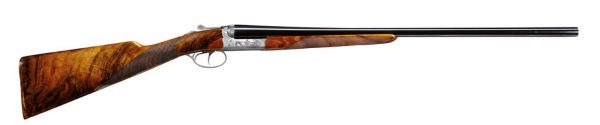
Side-by-side gun made by french manifacturer Chapuis model Progress Artisan RGP
Gauges and Chokes
The most commonly recommended gauges for waterfowl hunting are 12 and 20 gauge. These gauges offer a good balance of power and manageability, making them suitable for a variety of waterfowl species.
- 12 Gauge: Known for its versatility and power, the 12 gauge is the most popular choice for waterfowl hunting. It provides a good range and pattern density, making it effective for larger birds and longer distances.
- 20 Gauge: While slightly less powerful than the 12 gauge, the 20 gauge is lighter and easier to handle. It is an excellent choice for hunters who prefer a lighter firearm or are targeting smaller waterfowl species.
Medium chokes are generally recommended for waterfowl hunting. These chokes provide a balance between tight patterns for longer-range shots and wider patterns for closer targets. The use of interchangeable chokes allows hunters to adapt to varying hunting conditions and bird behavior.
Ammunition
When it comes to ammunition, the use of NOTOX (non-toxic) shot is strongly recommended and legally required for duck hunting in Italy. Non-toxic shot options include steel, bismuth, and tungsten, each offering different advantages:
- Steel: The most commonly used non-toxic shot, steel is affordable and widely available. It has a higher velocity but requires careful shot placement due to its lighter weight compared to lead.
- Bismuth: Bismuth shot is denser than steel, providing better downrange energy and penetration. It is a good alternative for hunters who prefer a performance closer to that of traditional lead shot.
- Tungsten: Tungsten shot is the densest and most effective non-toxic option, offering superior range and lethality. It is also the most expensive, but its performance can justify the cost for serious hunters.
Regulations and Hunting Ethics
In many regions, the use of a single shotgun is allowed, and the presence of a loader (someone who assists in reloading the firearm) is not permitted. This regulation ensures that the hunter performs all tasks independently, enhancing the personal satisfaction and challenge of the hunt.
Adhering to these regulations not only complies with legal requirements but also promotes ethical hunting practices. Hunters are encouraged to develop their skills and knowledge, ensuring that every shot is deliberate and responsible.
Duck hunting in Italy with the right firearms and ammunition can significantly enhance the hunting experience. Whether choosing a semi-automatic, over-and-under, or side-by-side shotgun, each offers unique benefits tailored to different hunting styles. The use of appropriate gauges, chokes, and non-toxic ammunition ensures effectiveness and environmental responsibility.
By understanding and adhering to the regulations and best practices, hunters can enjoy a fulfilling and ethical hunting experience. The challenge of waterfowl hunting, combined with the satisfaction of mastering one’s equipment and techniques, makes it a truly rewarding pursuit.
If this is one of your favorite hunts, now you can practice it in our beautiful country and with a purely exclusive program!
Find out more about the duck drive!