
Migrations, Europe’s Forests and the Feather that Conquered Painters
There is an hour, in the heart of autumn, when the forest seems to hold its breath. Wet leaves absorb the sound of footsteps, the air is filled with the scent of humus and silence, and the dog moves like a shadow among ferns and brambles. Then, suddenly, everything crystallizes: a steady, trembling point. In that suspended moment lies the essence of woodcock hunting.
The woodcock is not just a migratory game bird. It is a symbol. It is the archetype of search hunting, where technique meets instinct and respect precedes every action. It is a traveler that connects the boreal forests with the Mediterranean scrub, the Scottish moors with the Balkan hills. And it is also—surprisingly and poetically—the guardian of a unique feather, one that found its way into Renaissance painters’ workshops and modern restoration laboratories.
To tell the story of the woodcock means telling the story of ancient migratory routes, refined shooting techniques, legendary territories, and a tiny fragment of art hidden in its wing.
The Queen of Migratory Routes
Every year, when frost begins to tighten its grip on the forests of European Russia and Scandinavia, the woodcock begins its journey. It is a silent yet immense movement. Millions of birds travel south following invisible corridors shaped by wind, atmospheric pressure, and ancestral instinct.
The major migratory routes cross:
- the Baltic plains
- the forests of western Russia
- the Carpathian Mountains
- the Balkans
- the coasts of the Black Sea
- the Alpine arc
Some woodcocks descend toward Italy, others stop in France and Spain, while others still find resting places along the Adriatic coast or on the shores of the eastern Mediterranean.
Understanding these routes is essential for anyone who truly wants to understand how to hunt woodcock. It is not simply about walking through the forest; it is about reading the sky, observing weather fronts, and interpreting the first frosts. The great migratory “arrivals” often occur after sudden cold fronts that push flocks southward.
An experienced hunter watches the weather with the same attention used to observe the dog searching the woods.
The Forest: Where to Really Look
The question is eternal: where should you look for woodcock?
The answer is never simple, but there are biological and environmental constants. Woodcock prefer:
- soft soil rich in humus
- mixed oak and beech forests
- shaded slopes during mild days
- sheltered areas during intense frosts
- places with ditches, gullies, and small streams
After light rain, when the soil becomes soft and full of earthworms, the chances increase. During cold waves, however, woodcock move toward more temperate and protected areas.
Woodcock hunting is a school of observation. Every encounter becomes a piece of experience: noting the place, the exposure, the altitude, the weather conditions. Over the years, hunters build a mental map made of small secrets.
Woodcock Hunting Techniques: Precision and Composure
Woodcock hunting techniques are a balance between instinct and discipline.
The most authentic form remains hunting with a pointing dog. The dog intercepts the scent, slows down, and freezes. The point becomes a living sculpture. The hunter advances slowly, aware that the flush may be explosive.
In the forest, the shot is:
- close-range
- rapid
- instinctive
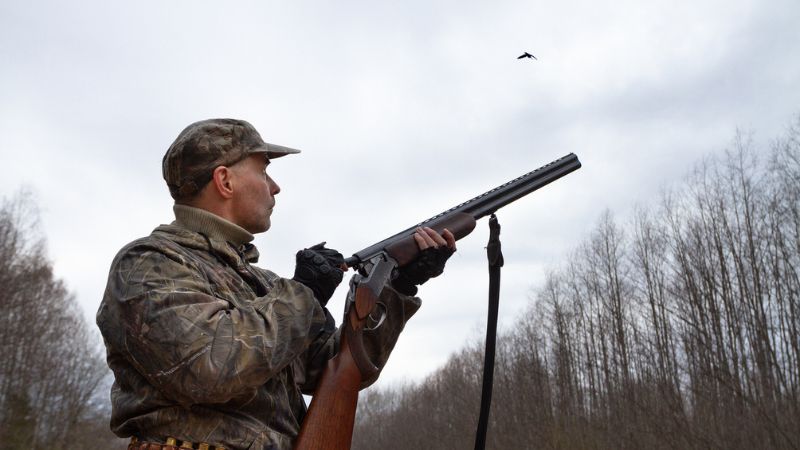
Woodcock shooting techniques require fluidity. One does not shoot in the panic of the flush but accompanies the bird through the brief arc of trajectory available between branches and foliage.
A woodcock may rise vertically or dart sideways with an unpredictable movement. This is where experience counts more than haste.
The Ideal Equipment: Lightness and Balance
Equipment for woodcock hunting must be functional for the forest environment.
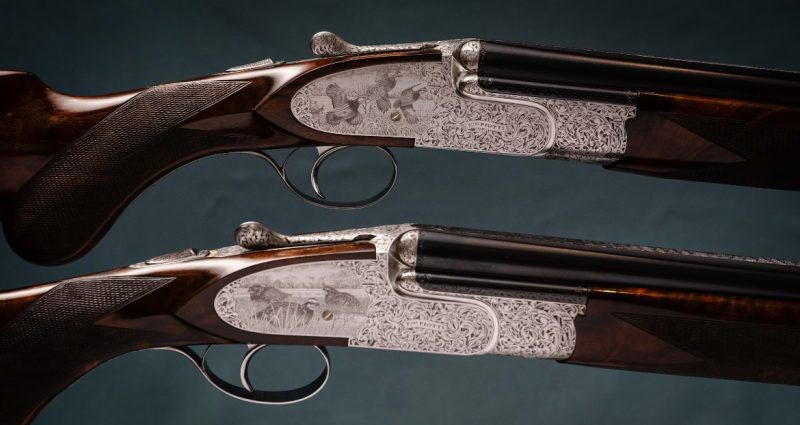
The ideal shotgun is light, well balanced, and quick to swing. Gauges 12, 20, and 28 are the most common, often with short or medium-short barrels that make it easier to move through dense vegetation.

Cartridges usually use fine shot sizes (9, 8, 7½) to ensure wide patterns at short distances.
Clothing must be quiet, resistant to brambles, waterproof yet breathable. Boots with high-grip soles are essential on wet terrain and slippery slopes.
In woodcock hunting, only the essentials are carried. Every extra gram is felt after hours of walking.
The Great European Woodcock Spots
Beyond the charm of Italian forests, there are territories that over time have become legendary among enthusiasts.
Crimea
For decades it was one of the most important migratory crossroads along the Black Sea route. Autumn concentrations could be extraordinary thanks to its strategic geographic position. Today geopolitical events complicate any prospect of hunting there, but Crimea remains in collective memory as one of the great lands of the woodcock.
Bulgaria
The Bulgarian hills and mountain forests intercept significant migratory flows. The alternation of forests, clearings, and humid valleys creates ideal habitats. It is a destination that still preserves authenticity and tradition.
Isle of Bute
In Scotland, the Isle of Bute offers an epic setting: moorlands, Atlantic winds, damp forests, and low mist. Here hunting merges with the romantic landscapes of the Highlands. Woodcocks that reach these latitudes find wild and evocative environments.
Ulcinj
On the coast of Montenegro, Ulcinj is a hot spot along the Adriatic migratory route. Wetlands and Mediterranean scrub provide strategic resting areas during migration.
Each place has its own hunting culture, ethics, and rules. Traveling in pursuit of woodcock also means discovering different traditions and new landscapes.
The Dog: The Soul of Woodcock Hunting
There is no true woodcock hunting without a great pointing dog.
English Setter, Gordon Setter, Pointer, Epagneul Breton, Kurzhaar—each with different characteristics but united by the same passion.
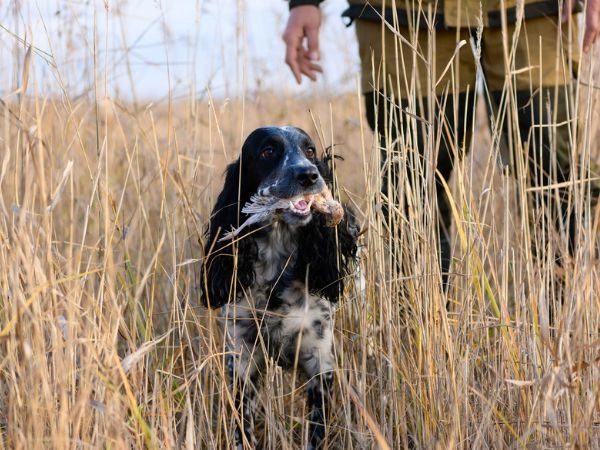
The English Setter embodies the aesthetic of this hunting style: elegant, connected with the hunter, with wide-ranging search and an intense point. Yet beyond the breed, the relationship is what matters most—understanding, trust, and shared work.
In the forest, man and dog form a silent partnership. The woodcock is the third element in this ancient dialogue.
The Painter’s Feather: The Secret Hidden in the Wing
And then there is the feather.
Among the primary wing coverts of the woodcock lies a special feather, small, rigid, and tapered. It is known as the painter’s feather.
For centuries it was sought after by miniaturists and restorers because of its ability to draw extremely fine lines. Its structure is elastic yet resistant, capable of holding pigment and releasing it with extraordinary precision.
In Italian Renaissance workshops, it is said to have been used to:
- refine minute details
- trace eyelashes and extremely thin lines
- decorate sacred miniatures
- intervene on gilded friezes
It is remarkable to think that a migratory bird—symbol of damp forests and sudden flushes—holds within its wing such a refined gift capable of serving art.
Even today, some restorers use it for micro-interventions on ancient artworks. It is an invisible bridge between the forest and the museum.
A Symbol of Balance and Respect
In the hunting world, the painter’s feather is not an ostentatious trophy. It is a discreet keepsake, often kept in a hat or cartridge pouch.
It represents precision, delicacy, and balance—the same qualities required in woodcock hunting.
It is not a hunt defined by numbers. It is a hunt of emotions. It is made of silence, waiting, and mistakes that teach humility. It is made of sudden flushes that remain engraved in memory.
Beyond Technique, Beyond the Bag
The woodcock crosses continents. It faces storms and cold fronts. It settles in the forests of Europe carrying with it a fragment of the North.
The hunter who searches for it is not only pursuing a bird. He is seeking an experience—seeking that moment when the dog freezes and the forest stops.
Between great migratory routes, legendary spots such as Bulgaria or the Isle of Bute, forests overlooking the Black Sea or the Adriatic coasts, and a feather capable of entering painters’ studios, the woodcock remains an elegant enigma.
A discreet queen.
A fragment of poetry that lives among wet leaves.
And that, every autumn, renews its ancient journey.