
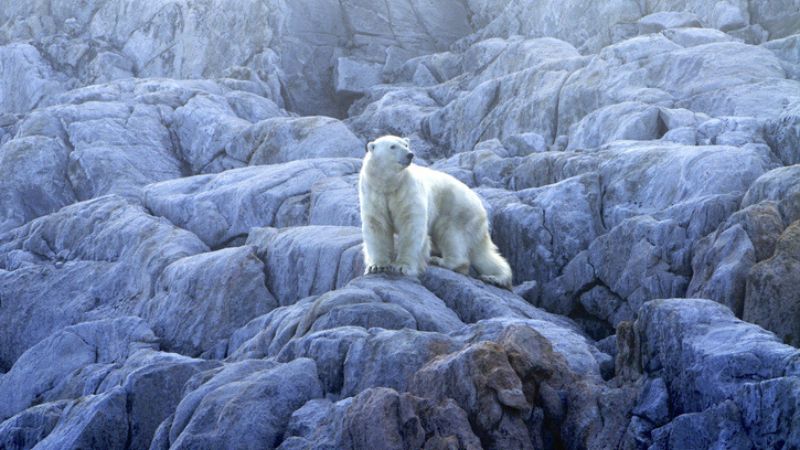
Imagine the absolute silence of the Arctic, broken only by the whisper of the wind sweeping across endless stretches of ice. The sky is a metallic blue, and the low sun hangs like a pale disc suspended above the frozen mist.
In this surreal landscape lives the protagonist of one of the most fascinating and controversial stories in natural history: the polar bear (Ursus maritimus). Behind its majestic appearance lies a past shaped by hunting, heroic exploration, and deadly challenges.
The King of the Ice
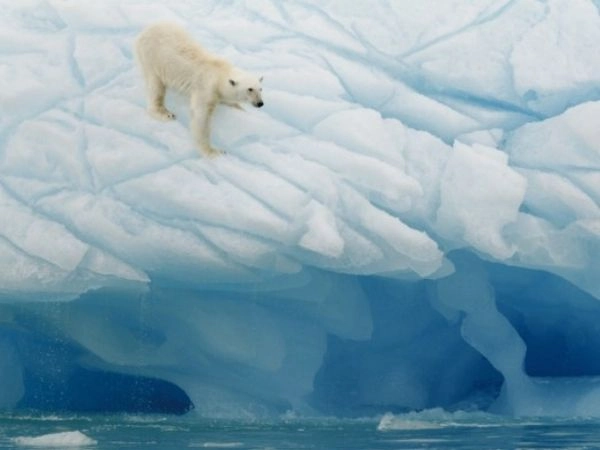
The polar bear is the largest land carnivore on Earth. An adult male can weigh more than 700 kg and reach three meters in height when standing on its hind legs. Its white coat—actually translucent—reflects light and blends perfectly with the surrounding ice. Beneath the fur, a layer of fat up to 10 cm thick protects it from temperatures that drop below –40°C.
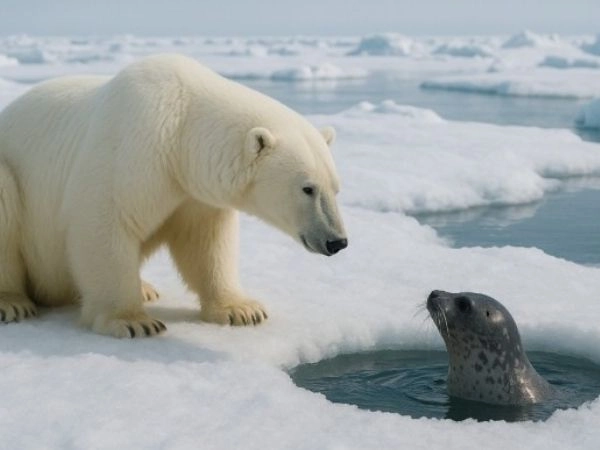
But size is not its only extraordinary trait: it is an indefatigable swimmer, capable of covering more than 100 km in icy waters without stopping. Its daily life is a constant struggle against cold and hunger. Often, it waits motionless for hours near breathing holes in the ice, ready to strike seals with lightning speed.
Hunting: From Origins to Legend
Indigenous Peoples
For thousands of years, the Inuit and other Arctic peoples hunted the polar bear to survive. Every part of the animal was used: the meat for food, the fur for protection against the cold, the bones for making tools. The hunt itself was ritualistic, guided by beliefs that saw the bear as a powerful spirit. After the kill, ceremonies were performed to honor its soul, for breaking this respect was believed to bring misfortune.
The Era of Expeditions
In the 19th century, polar bear hunting moved beyond subsistence and became an almost romanticized feat for European and American explorers. It was no longer about food, but about conquering a trophy symbolizing courage and dominance over the unknown. The Arctic—endless ice, perpetual winter darkness—was the last frontier, reserved for the boldest.
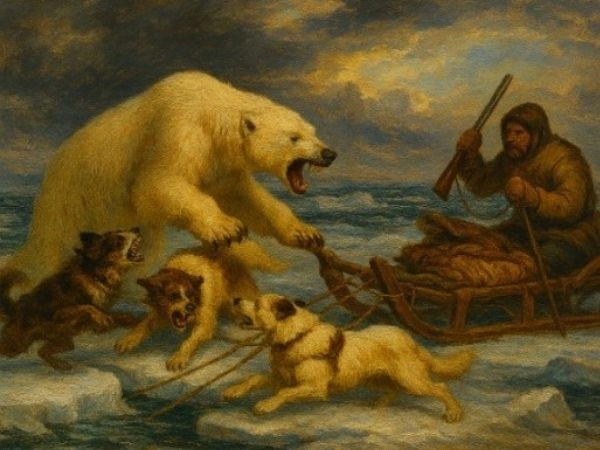
Expeditions were perilous. Men traveled with dog sleds, thin canvas tents, and rifles that often jammed in extreme cold. The dangers were countless: freezing weapons, treacherous ice, hunger, storms. In travel diaries, the hunt became a duel between two predators: man with his technology and the polar bear, embodiment of raw nature.
Explorers often described the tension before an encounter: a white silhouette on the horizon, still as a statue—but capable of charging with terrifying speed. A missed shot could mean death. Some accounts tell of wounded bears hiding among ice blocks to ambush their pursuers, demonstrating cunning and aggression.
These stories helped forge the myth of the Arctic—a land where every step could be your last.
Anecdotes from the Expeditions
Historical accounts are filled with dramatic episodes. In 1899, during a Norwegian expedition, a starving polar bear attacked the camp in the middle of the night. The men, awakened by the dogs’ frantic barking, fired blindly into the blizzard. When the blizzard settled, the bear was found dead just meters from the tents, its jaws still bloodstained.
Another famous story involves American explorer Robert Peary. These were not merely scientific missions: polar bear hunting was an integral part of the adventure. In his 1909 diary, Peary described a dramatic encounter: “The bear watched us from afar, motionless like a statue of snow. When we approached, it charged at us with a speed no one would have imagined. Only my companion’s precise shot stopped it.”
Many hunters described the polar bear as a cunning adversary, capable of following human tracks for kilometers. Some accounts tell of bears that, once wounded, hid among ice blocks to ambush the men. It was a battle between two predators: one armed with a rifle, the other with strength and instinct.
Techniques and Dangers
Early hunts used harpoons and rudimentary traps. With firearms, hunting became quicker but no less dangerous. A wounded bear could turn into pure fury: there are accounts of men being torn apart in seconds. Organized expeditions relied on local guides, long waits, and relentless pursuits across the ice—often under extreme conditions of hunger and freezing cold.
The Circle of the Ice King
Georg V., a Montefeltro client, remembered that day in Alaska vividly. The Arctic wind blew like an invisible blade, cutting through the skin and lifting clouds of snow that seemed like ghosts. For hours, he and his guide had been following the tracks of a polar bear—huge, deep prints that told the story of a giant of the ice.
Every step was a challenge. The silence was absolute, broken only by the labored breathing of the dogs and the creaking of the sleds. Georg felt his adrenaline rising: the trophy he had dreamed of for years was somewhere out there, ahead of them. The tracks were fresh—the predator could not be far.
But as time passed, something felt wrong. The tracks seemed to repeat, as if the landscape itself had turned into a labyrinth of snow. After hours of pursuit, the guide stopped, scanning the ground with careful eyes. Georg saw him turn pale.
“We’re not chasing the bear,” he said tensely. “It’s chasing us.”
A cold shiver ran through Georg. He looked around: the circle was perfect. The tracks were not leading them to the prey—they were closing in on them in a spiral. The king of the ice was studying them, circling like a white shadow, waiting for the right moment to strike.
The silence became oppressive. Every whisper of the wind sounded like a step, every shadow like a movement. Georg tightened his grip on the rifle; his heart pounded. This was no longer hunting—it was survival. At that moment, he understood the truth: in the Arctic, man is never the hunter. He is only a fragile guest, and the true sovereign is the polar bear.
Decline and Protection: From Unregulated Hunting to Sustainable Management
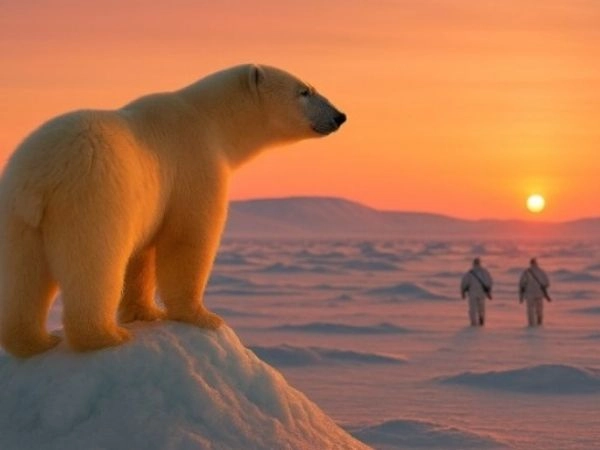
During the 20th century, sport and commercial hunting of polar bears reached levels that drastically reduced populations across the Arctic. Bears were killed not only for their fur but also as prestigious trophies, often without any regard for conservation. This pressure, combined with harsh environmental conditions, pushed the species to the brink of decline.
To address the situation, in 1973 five Arctic nations, Canada, the United States, Norway, Denmark (Greenland), and the Soviet Union, signed the Polar Bear Agreement, a historic accord that banned indiscriminate hunting and introduced strict conservation rules. From that point on, hunting was not entirely prohibited, but it became rigorously regulated.
Today: Hunting Is Possible, but Highly Regulated
Contrary to popular belief, polar bears can still be hunted, but only under strict controlled harvest and sustainable management practices. This means that:
Annual quotas are set by the relevant authorities, based on scientific studies and population monitoring.
Hunting is allowed only in specific areas of the Arctic, primarily in Alaska, Canada, and Greenland.
Indigenous communities have the right to hunt for subsistence, respecting cultural traditions and conservation regulations.
In some cases, regulated hunting expeditions can be organized, with special permits and under close supervision as part of wildlife management programs.
This form of hunting is no longer seen as indiscriminate exploitation but as a tool for ecological and cultural balance, contributing both to species conservation and the sustenance of local communities.
The Real Enemy: Climate Change
Paradoxically, the greatest threat to polar bears is no longer hunting, but climate change. In recent decades, global warming has radically transformed the Arctic ecosystem. Rising temperatures are causing sea ice to melt, reducing the bear’s natural habitat, which it relies on for hunting seals—its primary source of food.
As the ice retreats, polar bears are forced to swim increasingly long distances—sometimes over 150 km—to reach new hunting grounds. This effort exposes them to enormous risks: energy loss, hypothermia, and, in the most tragic cases, the death of cubs unable to keep up with their mother. In addition, the scarcity of prey weakens the bears, forcing them to approach human settlements in search of food, leading to conflicts and dangers.
Scientific studies show that the global polar bear population is declining and could drop dramatically by the end of the century if greenhouse gas emissions are not curbed. The polar bear has become a symbol of our planet’s fragility, an icon featured in environmental campaigns and climate reports to remind us that the fight against global warming affects not just one species, but the balance of the entire Earth.
Today, the challenge is no longer whether to hunt or protect, but to save the Arctic habitat. Without ice, polar bears cannot survive—and without the Arctic, the global climate suffers irreversible consequences.
Curiosities and Records
The Giant of 1910
In 1910, an American expedition reported the capture of a polar bear weighing over 900 kg (nearly 2,000 lbs)—a true giant of the ice. To put this record into perspective, the average adult male weighs between 400 and 700 kg. This specimen, likely in excellent health with abundant fat reserves, represents one of the largest ever documented. The explorers described the difficulty of transporting the carcass: it required multiple men and sleds to move, and once the hide was tanned, it became a legendary trophy.
Inuit Respect
For the indigenous peoples of the Arctic, the polar bear was not just a source of food and materials, but a sacred creature. The Inuit believed that the bear’s spirit had to be honored to avoid misfortune. After a hunt, complex rituals were performed: prayers were offered, gifts were placed near the carcass, and the skull was treated with particular reverence. Some traditions required the hunter to wear clean clothing and abstain from certain behaviors for several days as a sign of respect toward the animal’s spirit.
Endless Swimmers
Polar bears are extraordinary endurance athletes. Some individuals have been observed swimming more than 150 km without stopping, crossing icy waters in search of new ice platforms. This behavior, documented in recent studies, is a direct response to the shrinking sea ice caused by global warming. Such long-distance swimming carries enormous risks: energy loss, hypothermia, and, in some cases, the death of cubs that cannot keep up with their mothers. It is a dramatic demonstration of the species’ ability to adapt, and at the same time, a stark warning of the ongoing environmental crisis.
Extraordinary Sight and Smell
Another fascinating fact concerns the polar bear’s senses: its sense of smell is so advanced that it can detect a seal beneath the ice from more than a kilometer away. Its vision is also adapted to extreme conditions, allowing it to detect even the slightest movements in a landscape of uniform snow and ice, qualities that make it a truly formidable predator.
Longevity and Solitude
Polar bears can live up to 25–30 years in the wild, although most do not reach 20 due to the harsh environmental conditions. They are solitary animals, except during the mating season or when females are raising their cubs. This isolation makes them even more enigmatic and fascinating in the eyes of explorers.
The history of polar bear hunting is one of survival, adventure, and change. Once a symbol of strength, the polar bear has become an emblem of vulnerability, reminding us how fragile the balance between humans and nature truly is. Today, the real challenge is no longer confronting it with a rifle, but protecting it from our impact on the planet.
Technical Advice: Equipment for Polar Bear Hunting
Polar bear hunting, when permitted within regulated harvest and management frameworks, requires specific calibers and firearms to ensure a safe and ethical harvest. The polar bear is an exceptionally large and resilient animal: an adult male can exceed 700 kg, with a thick layer of fat and dense, robust bones. For this reason, it is essential to use ammunition with sufficient power to guarantee deep penetration and an effective, humane shot.
Recommended Calibers
The ideal calibers for polar bear hunting are high-energy, deep-penetration cartridges capable of delivering a lethal shot even in challenging conditions:
-
.375 H&H Magnum — the gold standard for large Arctic predators
-
.338 Winchester Magnum — excellent balance of power and accuracy
-
.416 Rigby — maximum stopping power for emergency situations
-
.300 Winchester Magnum — effective but requires precise shot placement
Note: It is always recommended to use solid or bonded bullets, designed to penetrate deeply without fragmenting.
Recommended Firearms and Gear
High-quality bolt-action rifles: brands such as Blaser, Mauser, Sako, and Benelli are highly valued for their reliability and accuracy in extreme conditions.
Cold-resistant optics: scopes with illuminated reticles and anti-fog coated lenses. Brands like Zeiss, Swarovski, and Leica are among the most recommended.
Revolvers: it’s advisable for at least the PH to carry a .44 Magnum for close-range emergency shots, as a wounded bear can attack with surprising speed.
Essential Equipment
- Thermal and white camouflage clothing: to withstand extreme temperatures and blend into the environment.
- Sleds and snowmobiles: for fast travel across vast ice fields.
- GPS and satellite radio: essential for navigation and communication in remote areas.
- Emergency kit: includes Arctic tents, stoves, food supplies, and a first-aid kit.
- High-brightness binoculars: for spotting tracks and animals at long distances.