
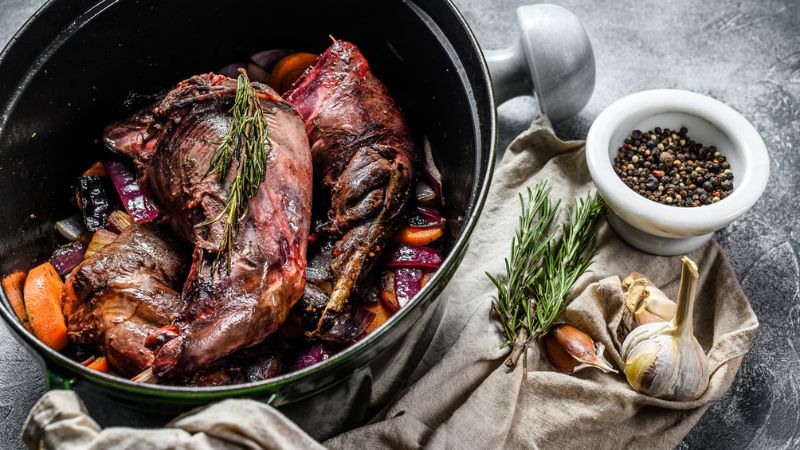
Hare in salmì is a dish deeply rooted in the Italian and French hunting culinary tradition, a preparation that for centuries has graced the tables of nobles and experienced hunters.
The term “salmì” comes from the French “salmi de gibier”, itself an abbreviation of “salmitare”, meaning to flavour and slowly cook game with wine and aromatics. This cooking technique dates back to the Middle Ages, when game was considered a symbol of prestige and its preparation required great skill and meticulous attention to detail.
Originally, salmì was a dish reserved for special occasions, when the hare—considered the king of game—was celebrated with elaborate recipes and long cooking times that enhanced its complex flavour. In traditional French and Piedmontese cuisine, salmì was synonymous with opulence and refinement, a dish designed to impress guests with its richness and depth of taste.
The Delicacy of Hare Meat
Hare meat is highly prized by discerning palates for its tender texture and bold yet balanced flavour. Compared to many other types of game, hare meat is lean, high in protein and low in fat.

Its distinctive taste is the result of the animal’s lifestyle: the hare is swift and alert, living in fields and forests and feeding on aromatic herbs, buds and roots. This natural diet enriches the meat with subtle, delicate aromas, which are further enhanced by marinating it in wine and by the addition of spices such as juniper berries, cloves and bay leaves.
Hare meat is particularly succulent thanks to its well-developed muscle fibres and a structure that retains juices during slow cooking. Salmì is one of the best methods for preparing it, as it allows the meat to absorb the flavours of wine, aromatics and vegetables, softening and becoming extraordinarily tender.
A Historic Dish for Special Occasions
Preparing hare in salmì is not merely a cooking technique, but a true ritual that requires patience and respect for the raw ingredient. The use of red wine in the marinade serves to tenderise the meat fibres and to soften the hare’s stronger, more gamey flavour, creating a perfect balance between taste and tenderness.
The long marination and slow cooking in a casserole allow the meat to gradually absorb flavours and soften, releasing all its juices while taking on the aromatic notes of herbs and spices.
Because of its richness, salmì is considered a dish that celebrates game and a passion for traditional cooking. It tells stories of ancient hunts, lavish banquets and evenings spent around the hearth, where the aroma of slowly simmering meat blends with the warmth of anticipation and conviviality.
Even today, this recipe remains a classic of haute cuisine, perfect for those who wish to relive the authentic flavours of tradition and offer their guests a dish that is, at once, a declaration of love for cooking and for game. Despite its apparent simplicity, hare in salmì requires skill and care, but its execution always delivers extraordinary results.
Hare in Salmì Recipe
Preparation Time: 30 minutes
Marinating Time: 12–24 hours
Cooking Time: 3 hours
Serves: 6
Ingredients
-
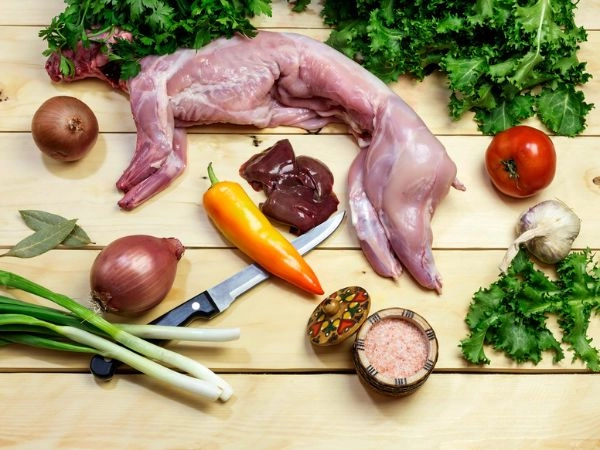
1 whole hare (about 1.5–2 kg), cleaned and cut into pieces
-
1 litre robust red wine (preferably full-bodied, such as Barolo or Chianti)
-
200 ml red wine vinegar
-
1 large onion, chopped
-
2 carrots, sliced
-
2 celery stalks, chopped
-
2 garlic cloves, crushed
-
1 bouquet of aromatic herbs (rosemary, bay leaf, thyme and sage, tied together)
-
6 juniper berries
-
6 cloves
-
5 black peppercorns
-
2 sprigs fresh rosemary
-
100 g pancetta, diced
-
50 g butter
-
3 tablespoons extra virgin olive oil
-
300 ml meat stock
-
4 tablespoons flour
-
50 g dark chocolate (optional)
-
Salt to taste
-
Black pepper to taste
Required utensil: Roasting pan or casserole
Method
1. Marinating the Hare
In a large bowl, mix the red wine and vinegar.
Add the onion, carrots, celery, garlic, herb bouquet, juniper berries, cloves and peppercorns.
Submerge the hare pieces in the marinade, cover with cling film and refrigerate for at least 12 hours, preferably 24. Stir occasionally to ensure even flavouring.
2. Preparing the Hare
Remove the hare pieces from the marinade and pat them dry with kitchen paper.
Strain the marinade, keeping the liquid and vegetables separate.
3. Browning
In a large casserole, melt the butter with the olive oil over medium heat.
Add the pancetta and brown until golden and crisp.
Add the hare pieces and brown them evenly on all sides to seal in the juices and intensify flavour.
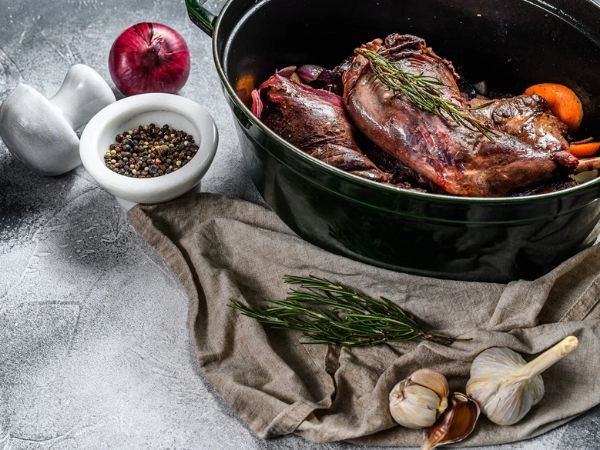
4. Slow Cooking
Once the hare is well browned, add the marinated vegetables and sauté for 5–10 minutes.
Sprinkle the meat and vegetables with flour and mix well to help thicken the sauce.
Pour in the marinade liquid and add the meat stock. Bring to the boil, then reduce to a very low heat.
Add the fresh rosemary and season with salt and pepper.
Cover and cook gently for about 2½–3 hours, stirring occasionally and ensuring the meat does not dry out. Add more stock if necessary.
5. Finishing the Dish
When the meat is tender and easily comes away from the bone, remove the hare pieces and keep warm.
If the sauce is too thin, reduce it over higher heat until it reaches the desired consistency.
For an extra touch, add the grated dark chocolate to the sauce and stir until fully melted. This adds depth and a subtle bittersweet note that balances the acidity of the wine and the richness of the meat.
6. Serving
Return the hare pieces to the casserole and gently coat them with the sauce.
Serve the hare in salmì hot, with its rich, velvety sauce. Traditionally, it is accompanied by steaming polenta, mashed potatoes or toasted bread crostini.
Tips
-
Marinating time: The longer the hare marinates, the more flavourful and tender it becomes. Ideally, leave it for a full 24 hours.
-
Chocolate: Optional, but it adds a refined bittersweet note that enhances the complexity of the dish.
-
Stock: Use a flavoursome but unsalted stock to better control seasoning during cooking.
Curiosity
The term “salmì” comes from the French “salmi”, short for “salmi de gibier”, referring to game cooked slowly with wine and spices. This method is designed to enhance flavour and tenderise the meat, resulting in a refined and luxurious dish.