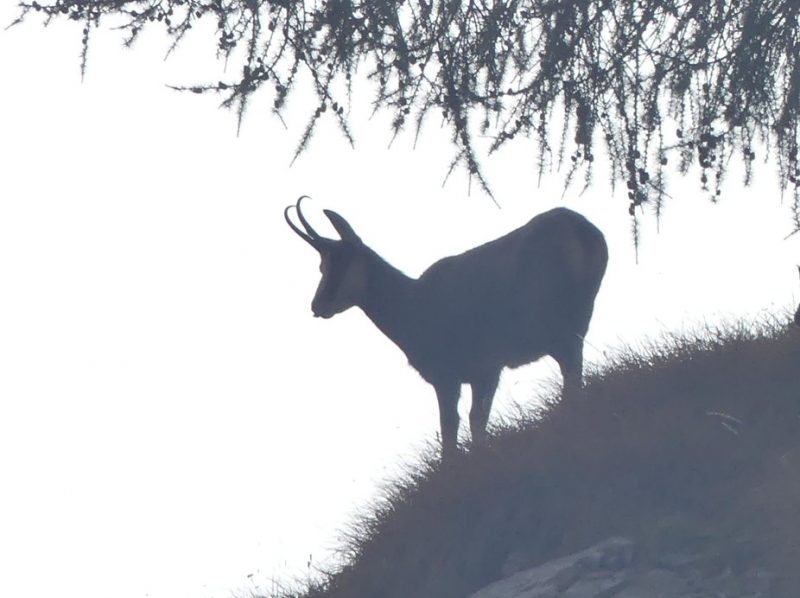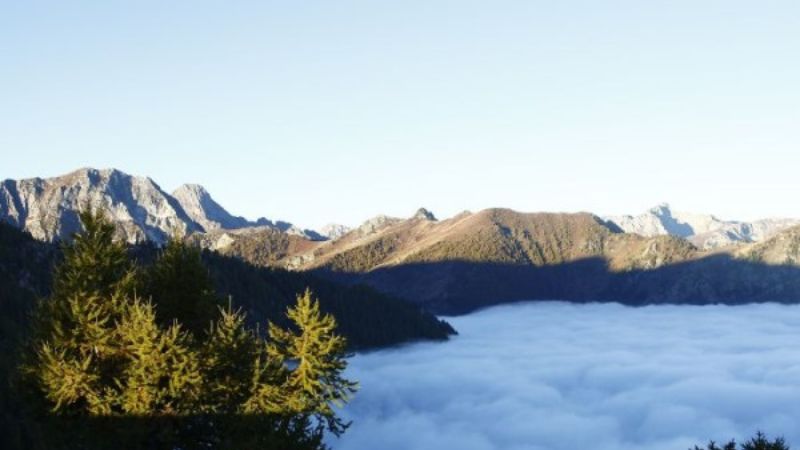

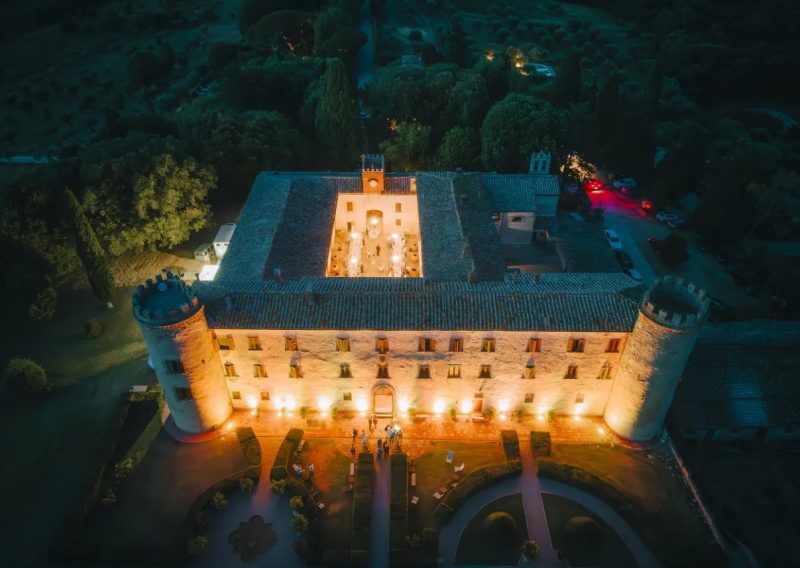
In Central Italy, especially Tuscany & Umbria, you’ll hunt roe deer (prime June–September) and wild boar (managed estate hunts year‑round, with traditional driven boar in season), plus fallow deer on select estates, and upland birds such as pheasants, partridges and quail (including English‑style driven pheasants on historic properties). Always verify the current regional hunting calendars for Tuscany and Umbria before booking; foreign hunters must hold an Italian hunting license and mandatory liability insurance, which reputable outfitters arrange, and can bring a rifle or rent locally (renting is often simpler for US guests).
Overview: why Central Italy works
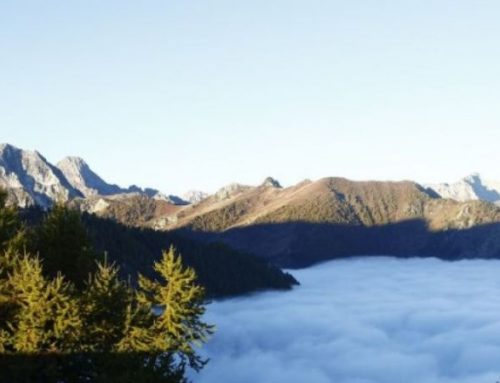
Rolling vineyards, olive groves and oak woods set the stage for relaxed yet exciting hunts in Tuscany & Umbria, where mornings and evenings in the field pair naturally with daytime wine tastings, cooking classes and hill‑town touring a perfect formula for hunters traveling with non‑hunters. Many itineraries use Rome or Florence as gateways and base you in a villa or boutique lodge near the grounds.
A short tradition & hunting styles
Hunting in central Italy blends centuries‑old tradition with modern regulation and regional calendars, reinforcing fair‑chase ethics and seasonal compliance. In Central Italy you’ll encounter three classic styles:
- Quiet stand / high‑seat for boar & roe at dawn/dusk along field edges and oak stands.
- Driven wild boar (braccata)—a social, adrenaline‑filled day for groups, available during specific seasonal windows on suitable estates.
- Upland walk‑up with pointing dogs for pheasants, (grey/red) partridges, and quail on mixed agricultural mosaics.
What you can hunt in Central Italy
- Roe deer (Capreolus capreolus): hallmark Central Italy stalks; prime June–September.
- Wild boar (Sus scrofa) — managed estate hunts year‑round; classic driven boar in seasonal windows.
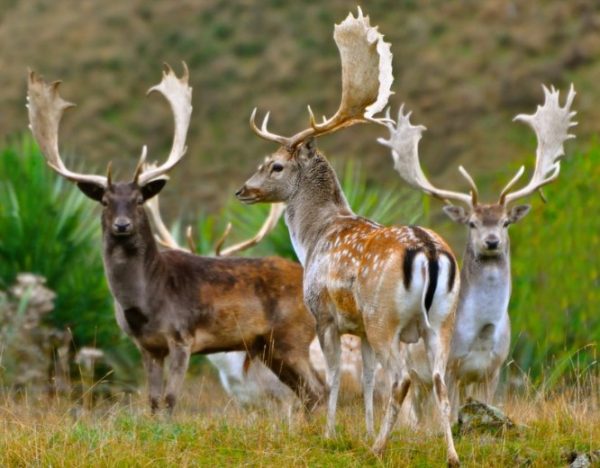
- Fallow deer (Dama dama) — available on select Tuscan estates alongside boar and roe; estate/Region rules apply.
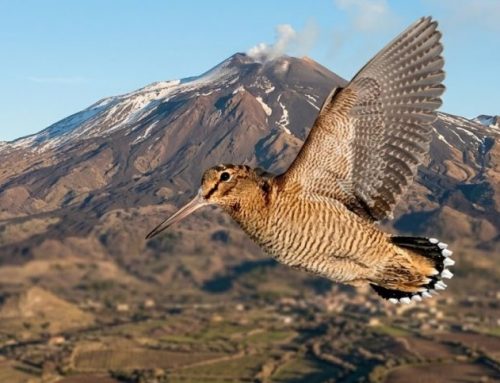
- Upland birds — pheasant, partridge, quail in season, typically as walk‑up with dogs or small driven days on estates.
Note: Exact opportunities depend on the property and the current regional calendars (see below).
Seasons & best windows (check Region before you book)
Italy sets hunting at the national level but dates vary by Region and may change mid‑season; always reconfirm Tuscany and Umbria before travel.
| Species | Indicative prime window | Notes |
|---|---|---|
| Roe deer | June–September (varies by area/sex class) | Early and late‑light stalks in vineyards/wood edges. |
| Wild boar | Year‑round on managed estates; driven in seasonal windows | Stand/high‑seat most of the year; driven hunts require estate & regional alignment. |
| Pheasant / partridge / quail | Autumn (regional calendar) | Typically walk‑up with pointing dogs; confirm species‑specific dates per Region. |
Important: Dates vary by Region (and by species). Verify the current Tuscany 2025/26 and Umbria 2025/26 calendars on the official portals before finalizing your trip.
Licenses, insurance & firearms (foreign hunters)
- Legal framework — Foreigners can hunt in Italy when holding an Italian hunting license and mandatory third‑party liability insurance; reputable outfitters typically arrange both and ensure compliance with each Region’s calendar.
- Bring your own vs. rent — You can bring a rifle with advance paperwork and airline procedures, but most US guests find renting locally simpler and faster. (See the pillar pages “Licenses & Insurance” and “Firearms — Bring vs Rent”.)
Terrain, pace & gear (Central Italy)
Expect gentle to rolling terrain, vineyards, grain fields, oak copses, hedgerows, ideal for roe buck stalks and evening boar. Clothing follows a layered approach (cool mornings, warm middays), with lightweight boots suitable for mixed farm/woodland. Night‑capable optics may be regulated; your outfitter will advise per estate and Region.
Non‑hunter experiences (why it’s perfect for couples & families)
Between hunts, Central Italy shines: wine estates, olive groves, Tuscan cookery classes, spa time, and medieval hill towns, often within a short drive of your lodge or villa. This balance is a key reason many guests choose Tuscany & Umbria for their first Italian hunt.
Sample 7‑day itinerary (illustrative)
Day 1 – Arrive via Rome or Florence; transfer to countryside villa; safety briefing & rifle check.
Days 2–3 – Roe deer stalks at first/last light; mid‑days for winery visits and local villages.
Day 4 – Upland walk‑up with pointing dogs (pheasant/partridge/quail in season).
Day 5 – Wild boar evening high‑seat (or driven boar if dates/estate allow).
Day 6 – Flex day: add a roe buck/boar outing or a full day in Siena/Perugia.
Day 7 – Departure (or extend to the Tuscan coast / Val d’Orcia).
Your exact program will follow the regional calendars, weather, and estate availability.
Castello del Calcione Estate a Montefeltro hunting experience in Tuscany (Val di Chiana, Lucignano)
Why Calcione
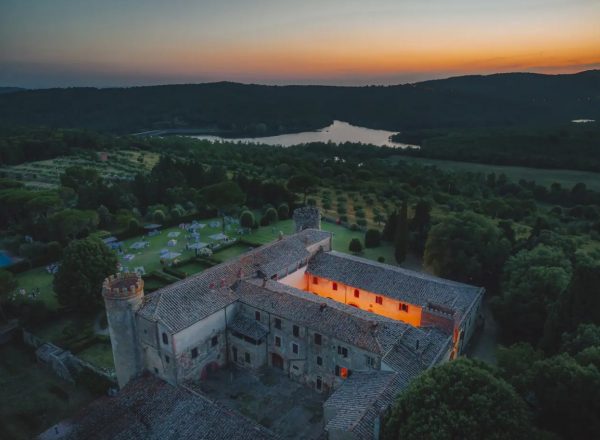
In the heart of the Val di Chiana, between Siena and Arezzo, the Castello del Calcione estate offers a rare natural setting: woodland, glades, ridge lines and two lakes that lend themselves to measured, safe days afield in full compliance with regional calendars. It’s the ideal place to alternate dawn and dusk outings with non‑hunting experiences (food, wine, horses) without leaving the estate perimeter, plus straightforward logistics from Rome or Florence.
Size & landscape. Sources converge on a large, hilly property: estimates indicate ~1,200 hectares (woods, lakes, olive groves) and, in local tourism materials, ~2,400 hectares, in any case, a generous territory where you can plan technical yet “slow” hunts.
Location & terrain
The estate lies in Lucignano (Arezzo) along the ridge overlooking the Val di Chiana: wood belts, fallow land, meadows, crest lines for long views, and paths linking small valleys and scrub, a Tuscan mosaic that’s perfect for crepuscular high‑seat sessions and walked‑up action in gentle hill country.
What you hunt & recommended styles
Wild boar, evening high‑seat outings most of the year on managed grounds; where appropriate, driven hunts (braccata) within seasonal windows.
Upland with pointing dogs, walked‑up days for pheasant, partridge and quail when permitted by the regional calendar; a style based on reading the ground and taking well‑measured shots.
Seasonal note: always verify Tuscany’s official hunting dates before travel; windows can be updated or adjusted on a precautionary basis during the season.
Hospitality & non‑hunter experiences
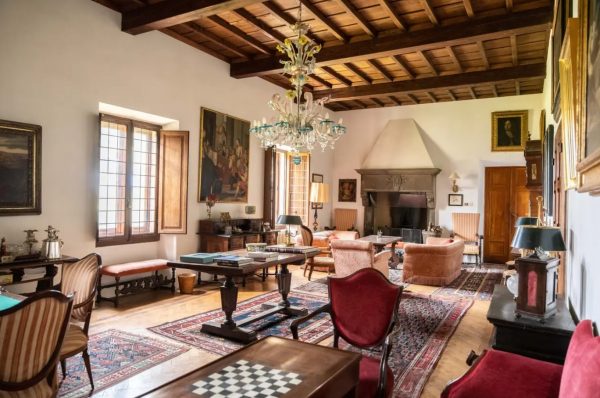
The castle and historic farmhouses on the estate host companions with pool, swimmable lakes, horseback rides, truffle hunting, cooking classes and flexible spaces for private events, a true Tuscan retreat where the day continues “off the field.”
Historical notes
The toponym “in castrum Calcionis” is recorded as early as 984; from 1483 the property begins its long history with the Lotteringhi Della Stufa family, and in 1632 the fief was elevated to a marquisate by the Medici. Local tradition also recalls a possible visit by Leonardo da Vinci during his hydraulic studies on the Val di Chiana. Today, the Castle still presides over a landscape of woods, lakes and olive groves, with an 18th‑century church (frescoes by Luigi Ademollo) and a small art collection.
Safety, licenses & seasons (compliance)
Outings are conducted under regional rules and safety standards (briefing, firearm/optic check, respect for hours and limits). Foreign hunters must hold: Italian hunting license + mandatory liability insurance; a qualified outfitter will handle paperwork and local compliance. Before departure, consult Tuscany’s official calendar.
A typical day (example)
- Dawn — zero check & safety; stalk/high‑seat along edge habitat.
- Midday — return for estate olive‑oil/wine tasting and downtime by the lake.
- Afternoon — walked‑up with dogs (in season) or back to the high‑seat for boar.
- Evening — dinner in villa/farmhouse and planning for the following day.
Logistics & stay
Base yourself in Lucignano with convenient road links; the complex offers historic villas/farmhouses, a pool and services for families and groups. For trip extensions, many art cities are within an hour’s drive.
FAQs
Is Central Italy good for a first hunt in Italy?
Yes, terrain is forgiving, logistics are easy (Rome/Florence), and the roe deer + wild boar combo suits mixed groups with strong tourism options.
When’s the best time for roe deer and boar here?
Roe deer peak June–September; boar are available year‑round on managed estates, with driven boar in defined seasonal windows. Always reconfirm Tuscany/Umbria dates.
What paperwork do I need as a foreign hunter?
An Italian hunting license and mandatory liability insurance are required; your outfitter usually handles both and regional compliance.
Can non‑hunters enjoy the trip?
Absolutely, wine, food, art cities, spas make Central Italy one of the best regions for couples/families traveling with a hunter.
Plan your hunt ! Tell us what, where and when you’d like to hunt our team will design a seamless, luxury Central Italy itinerary (we handle license & insurance and can arrange local rifle rental).