Dawn in Romania does not arrive all at once: it glides over the waters of the Danube like a sheet of pale silk, wraps the reeds in a copper glow, and lights up in the distance the silhouettes of poplars and locks.
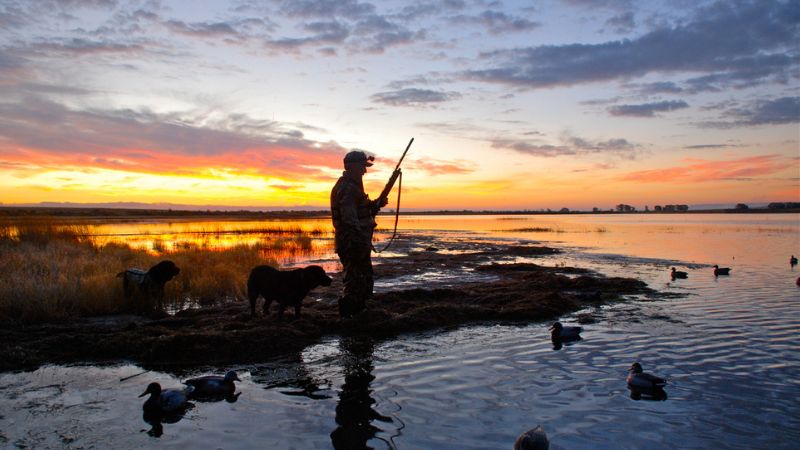
In the hide, tucked away like a wrinkle in the landscape, your breathing falls into the slow rhythm of the river. Even before the first call, you hear a whisper above: a thread of air slices through the mist and carries the sound of a wing; then another; then ten, a hundred, a thousand. The flock forms like an ancient word, and on the mirror of the water the decoys become living presences.
Here, hunting is a ritual born of geography and fulfilled through patience: it is not haste, it is not noise. It is waiting, observation, restraint. Technique and poetry shake hands: when the first group drops altitude, the heart quickens, yet the gesture remains measured. The call is not display; it is language.
Romania lies along a natural corridor linking Arctic and boreal regions with southeastern wintering grounds. The Danube, Europe’s great artery, guides waterfowl across a mosaic of lakes, marshes, floodplains, flooded fields and reed beds that offer rest, shelter and food. In autumn and winter, the meeting of water, reeds and farmland creates an extraordinary concentration of birds: flocks tightening into clean formations, banking elegantly, breaking the horizon like strokes of calligraphy.
We are not speaking of the heart of the Danube Delta, an integral reserve and UNESCO heritage site, but of authorized hunting areas along the Danube, a short distance from Bucharest. Those who pursue migratory game in these zones step into a natural theatre where the rule is clear: hunt only where and when it is permitted, with quotas and permits, in full respect of wildlife and local communities.
The southeastern route is favored by:
Boreal origins: from tundra and northern steppes, flocks move south to escape harsh winters.
Rivers and wetlands as “rails”: following water ensures regular stopovers for feeding and rest.
Habitat diversity: shallow waters, extensive reeds, reservoirs and flooded fields create ecological niches for different species.
Relative security: less disturbance at certain hours, vast open spaces, natural cover.
The Protagonists: Species, Traits, Behavior
Ducks
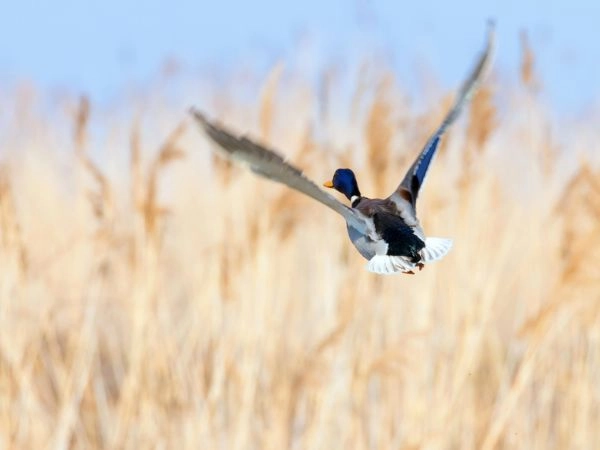
Mallard: decisive in flight, versatile in movement. Prefers shallow vegetated waters and flooded fields. Intelligent and wary, it tends to “read” the decoy spread.
Teal: fast, unpredictable, banking sharply. Loves quiet channels and narrow water blades. Short, rhythmic calls work best.
Garganey: elegant, often swings wide before hinting at a landing. Convinced by airy, well-spaced decoy patterns.
Wigeon: distinctive voice, attentive to water brightness and submerged vegetation; more cautious in crosswinds.
Geese
Greater White-fronted Goose: tireless traveler, covering thousands of kilometers; seeks open areas, fields, gravel bars; observes carefully and lands long.
Greylag Goose: structured, hierarchical within the flock. Responds to realistic decoys and coherent setups.
Barnacle Goose: northern icon, recognized by the pale oval on its face. High flight, wide descents.
Each species requires a calibrated approach: tone of the call, layout of the spread, management of time and wind. The difference between a “pass” and a committed landing may lie in ten meters of water or two seconds of light.
Advanced Techniques: From Hide to Sky
Hides and Setups
A well-designed hide is not only concealment; it is an observatory. The ideal position offers visibility over feeding routes, a clear shooting lane, wind cover, and respectful distance from roosts. Materials: local reeds, wide-mesh camouflage netting weighted with live vegetation, non-reflective fabrics. Avoid sharp profiles; embrace asymmetry.
Decoys: Arranged Like Nature
Ducks: broken groups, water gaps between clusters to create “landing corridors.” Leave a 10–15 m landing pocket in front of the hide.
Geese: high-quality decoys with varied postures. Wide fan-shaped spread with the point into the wind; sentinels slightly offset. Integrate silhouettes for long-range visibility.
Realism over quantity: a few well-placed decoys often outperform rigid ranks.
Calling: Voice, Rhythm, Pause
The call is meant to enter into dialogue: you must “read” the flock—altitude, tension, curiosity. With teal, use short, whispered sequences. With mallard, vary the intensity in rising and falling notes; with geese, fuller and more rhythmic tones. Remember: silence is part of the language. If the flock sets up correctly, stop and let the water speak.
The rule is simple: clean shots, reasonable distances, safety first.
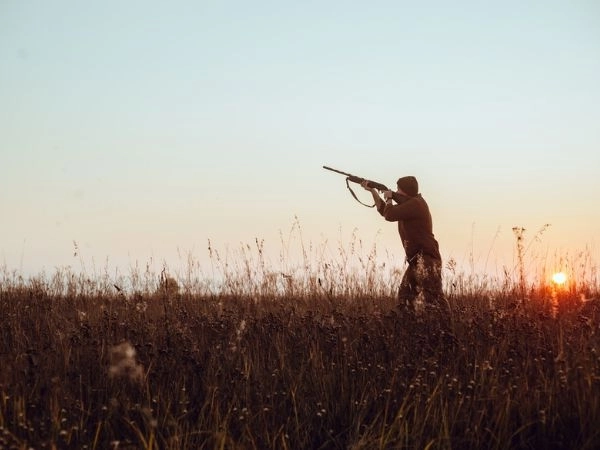
With a headwind, ducks slow down—focus on the head and apply minimal lead. In crosswinds, assess the apparent speed, which is often greater than it seems. With geese, double-check both height and angle. Never force shots into compact flocks: avoid wounding.
Weather, Light, Water: Three Silent Masters
Wind: it is the director. From the north it brings tight, driven flocks; from the west it reshapes flight lines; light breezes favor low morning passes. Positioning decoys into the wind encourages clean landings.
Light: dawn offers strong contrasts, but true magic often lies in the half-light between first glow and full day. Hunt in the shadows, not against the sun.
Water: depth and clarity matter. Dark, rippled water makes decoys more convincing. On flat water, breaking the surface with light anchors or subtle movement adds realism.
Firearms, Loads, Chokes: The Conscious Setup
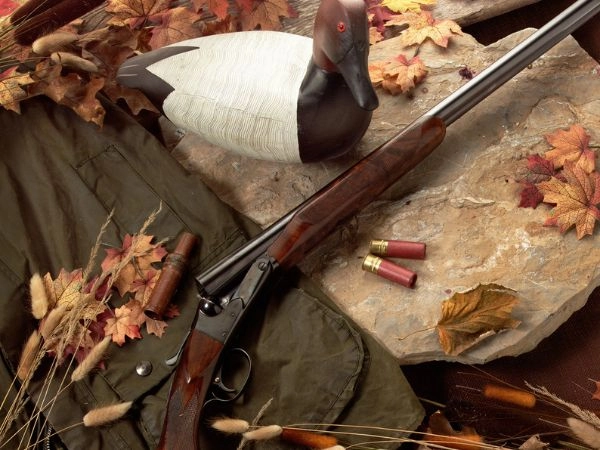
Shotguns: semi-automatic or over-under 12 gauge for versatility. Reliable actions are essential in humid climates.
Ammunition: where required, steel or bismuth. With steel, pay close attention to choke pairing (avoid excessive constriction at close range).
Chokes: interchangeable; cylinder/IC for early light and close duck shots; M/IM for geese and longer distances.
Optimization: test your pattern at 30–40 meters over decoys at the range. Consistent shot patterns matter more than pellet count on the box.
Regulations, Safety, Ethics: Hunting as a Relationship
In Romania, hunting is allowed only in authorized areas and with proper permits; harvest quotas must be strictly observed.
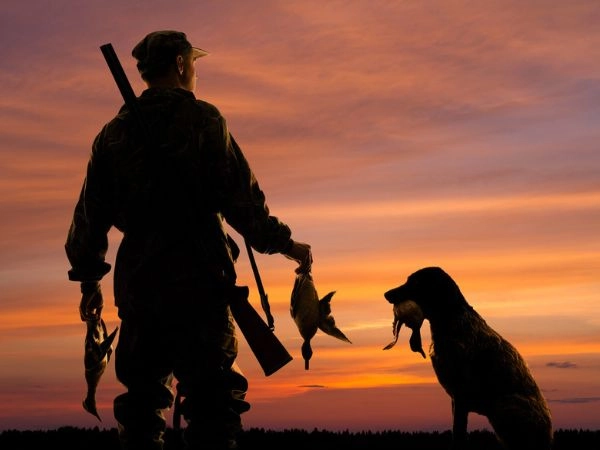
The terrain requires good practices: avoid approaching roosts, minimize disturbance during adverse weather, collect spent shells, use alternative shot where required, and ensure retrieval of downed birds.
Ethics form the backbone: migration is natural capital. The hunter becomes the guardian of the landscape—and a good guardian watches quietly.
Romanian Hunting Culture: Gestures, Table, Hospitality
Waterfowl hunting in Romania is a community tradition: land is shared, waterways are respected, and the bounty is reciprocated carefully. After the hunt, hospitality is warm and generous: hearty soups, fermented vegetables, roasted meats, local wines.
Stories flow like the river: every old hunter has memories of sudden fogs, impossible turns, empty skies followed by a sudden, full sunset.
Logistics: How It Really Works
Areas: authorized zones along the Danube outside the Delta. Close to Bucharest for quick arrivals and transfers.
Season: October–January is peak migration; peaks depend on cold fronts and water levels.
Typical day: wake before dawn, hide set up, first passes in low light; midday pause; afternoon session at sunset.
Gear: waterproof, breathable clothing; thin gloves; tall boots; headlamp with red filter; decoy lines and anchors; thermos.
Safety: maps, clear shooting lanes, constant communication among companions.
Photo & content management: respect the places and people; no images in roosts; tell the landscape story before shooting.
Sample Setup (Real Scenario)
First light, light NW wind, overcast sky.
Hide in reeds at the mouth of a canal opening onto wide water.
Duck decoys: 12–18 in three clusters; 12 m landing pocket in front; 2 “feeding” decoys in shallow water.
Goose decoys: 8 silhouettes + 4 full-body, fan-shaped spread into the wind; 2 tall lateral sentinels.
Calling: ducks—medium pattern, generous pauses; geese—full calls when approaching, silence as they commit.
Shooting: 30–35 m; prioritize lateral birds to avoid overlap; continuously monitor angles relative to the hide.
11) Common Mistakes (and How to Avoid Them)
Decoys too tight: break natural look; leave spaces.
Overcalling: if the flock commits, stop.
“Perfect” but rigid hide: straight lines betray; irregularity and local materials win.
Long “gut” shots: increase wounding; reduce distance, adjust setup.
Ignoring the wind: the wind is king; the setup starts there.
12) Departure Checklist
Permits and documentation in order; insurance.
Serviced shotgun, chokes, and tools; 2–3 test loads.
Selected decoys, anchors, lines, mesh bags.
Waterproof clothing, breathable base layers, technical socks.
Optics if needed, headlamp, knife.
First aid kit, shell waste bag.
Thermos, energy snacks, offline maps.
13) Migration Ethics: Conservation and Respect
The beauty of this hunt comes from a millennial balance of flyways, waters, seasons, and agriculture. A hunter crossing Romania along the Danube becomes both guest and custodian. The quality of the experience grows with restraint: sustainable harvest, diligent retrieval, attention to other users (birdwatchers, anglers, farmers). The uniqueness of the ritual lies not in the count—but in the memory of a dawn fully lived.
Best period: October–January; monitor cold fronts, water levels, and wind.
Hunting in the Danube Delta? No: activities take place outside the reserve, in authorized zones.
Steel/bismuth required? Where prescribed, yes—check local regulations and choke setup.
Importance of decoys: realism and spacing matter more than quantity.
Managing wind: position the fan into the wind; create landing corridors.
Photography: yes, with etiquette; no disturbance in roosts; focus on landscape and responsible practice.
Experience migratory hunting with Montefeltro: dedicated hides, smooth logistics, expert guides, permits in order, full respect for rules and nature. We can design a tailored itinerary that blends technique, emotion, and culture.