
Anyone approaching wild boar hunting for the first time quickly realizes that it is not just a form of hunting. It is something deeper.
It is a collective ritual, a test of character, a lesson in patience and self-control. It is an ancient confrontation with an animal that, for centuries, has embodied strength, intelligence, and resilience. Not by chance, in European tradition, the wild boar has always been considered the true “king of the forest.”
In Italy, wild boar hunting has deep historical roots. As early as the Renaissance, in the Tuscan, Umbrian, and Emilian countryside, it was practiced as both a noble and popular activity. Chronicles tell of great drives organized by the courts of the Medici, the Este, and the Gonzaga, where the boar represented not only prey but a symbolic, almost chivalric challenge. It was a hunt of courage, teamwork, and physical endurance.
Centuries later, in a world dominated by technology and speed, wild boar hunting still retains that archaic charm. It brings hunters back to a slower, more authentic dimension, made of silence, waiting, and sudden bursts of adrenaline.
But how do you really begin? And what does it take to do it properly, without improvisation and without feeling like an outsider among experienced boar hunters?
From paperwork to the forest: licenses, rules, and responsibilities
Before the rifle, before the dogs, before the adrenaline, there is a mandatory step: the hunting license. In Italy, anyone who wants to hunt wild boar must follow a precise and regulated path. You must pass a regional hunting exam covering legislation, safety, species knowledge, and firearms. It is a serious test designed to train responsible hunters, not just shooters.
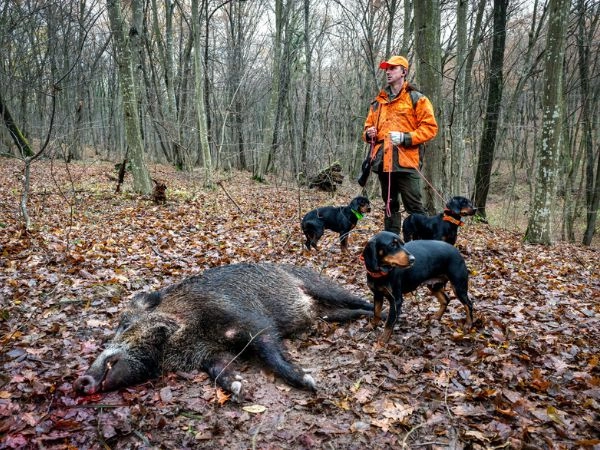
In many regions, a specific certification for wild boar hunting is also required, especially for collective methods such as driven hunts (braccata). This qualification certifies that the hunter understands team dynamics, safe shooting techniques, and behavioral rules that can make the difference between a successful outing and a dangerous situation.
To this is added membership in a Territorial Hunting Area (ATC) or an authorized team. Wild boar hunting, especially in driven hunts, is never an individual act: it is coordinated, regulated, and shared. The bureaucracy may seem long, but it forms the foundation for safe, respectful, and sustainable hunting.
The main techniques of wild boar hunting
There is no single way to hunt wild boar. There are multiple approaches, each with its own identity, rhythm, and language.
Driven hunts (braccata) are undoubtedly the most iconic form. They are the ultimate team hunt, almost unchanged through the centuries. Dogs work in dense cover, handlers guide them, and standers wait along escape routes. Silence, discipline, and mutual trust are essential. It is a collective hunt where success is never purely individual.
Then there is the battuta, similar in structure but smaller in scale, often with fewer hunters and dogs. It is a more controlled form, suited to specific territories and smaller groups.
Finally, girata hunting, probably the most technical and quiet method. A single hunter, one or two dogs, careful reading of tracks and wind. Here, the confrontation with the boar is more direct, almost personal. It requires experience, composure, and deep knowledge of the land.
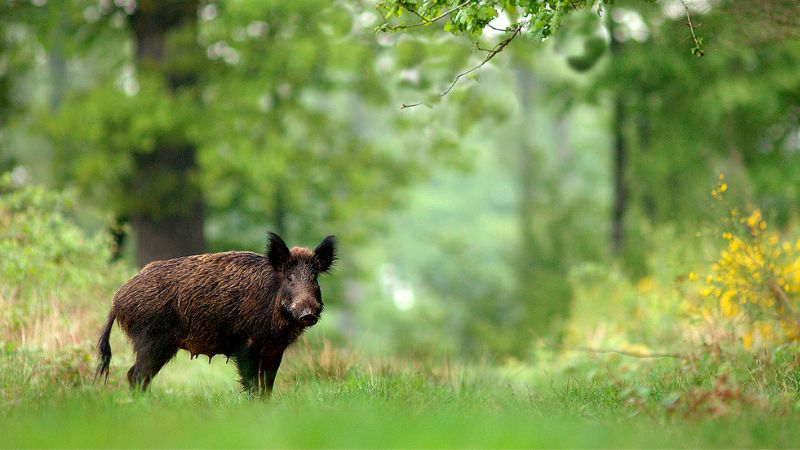
In every case, the wild boar remains a formidable opponent: intelligent, cautious, capable of vanishing into nothingness and sometimes watching you from the undergrowth with a gaze that is hard to forget. Anyone who has missed a shot knows exactly what that means.
Weapons and equipment: power with control
To begin hunting wild boar, you need suitable firearms. Driven-hunt carbines and semi-automatic shotguns are among the most common choices. Popular calibers such as .308 Winchester, .30-06 Springfield, and 9.3×62 offer power, reliability, and stopping ability—but they require control and awareness.
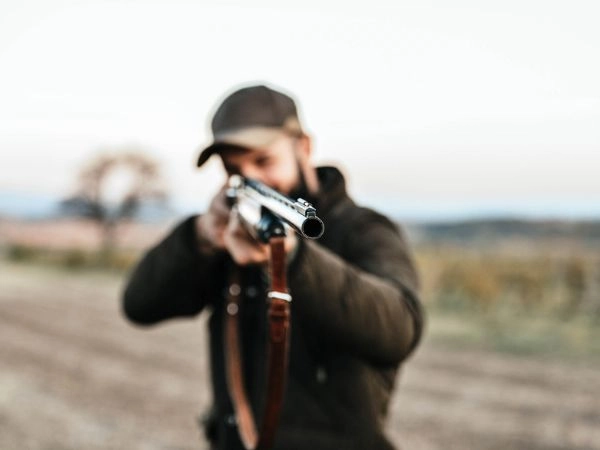
Ammunition must be high quality, with expanding bullets designed to ensure ethical kills. Wild boar hunting does not allow improvisation: a poorly placed shot is not just a technical mistake but a lack of respect for the animal.
Clothing also plays a crucial role. Modern hunting demands technical, durable, quiet, and highly visible gear. Tear-resistant vests, waterproof boots, functional gloves, and an essential backpack complete the setup. In the forest, every gram counts—and after hours of walking, you understand why.
The unwritten rules of the driven hunt
Alongside official regulations, there are rules you will never find in a manual. The first is silence: the forest speaks only to those who know how to listen. The second is safety: never run toward a shot, never fire without a clear view. The third is absolute respect for the hunt leader, the central figure who coordinates hunters and dogs.
And then there is humor—the kind that eases tension. Jokes about missed shots, endless debates over “who actually saw it,” breakfasts shared before dawn. It is an essential part of wild boar hunting, an oral tradition passed from generation to generation.
The wild boar in history and culture
The wild boar is not just prey—it is a symbol. It appears in medieval heraldry, mythology, and literature. In Italy, authors and travelers have often described wild boar hunting as a formative experience. Even Ernest Hemingway, a passionate hunter and frequent visitor to Italy, wrote about the importance of confronting nature and the wild, recognizing hunting as a return to something essential and primal.
It was not nostalgia. It was awareness.
How to truly begin: step by step
To start hunting wild boar, you need:
- a valid hunting license and specific certification
- membership in an ATC or authorized team
- suitable firearm and proper ammunition
- technical, high-visibility clothing
- strict adherence to safety rules
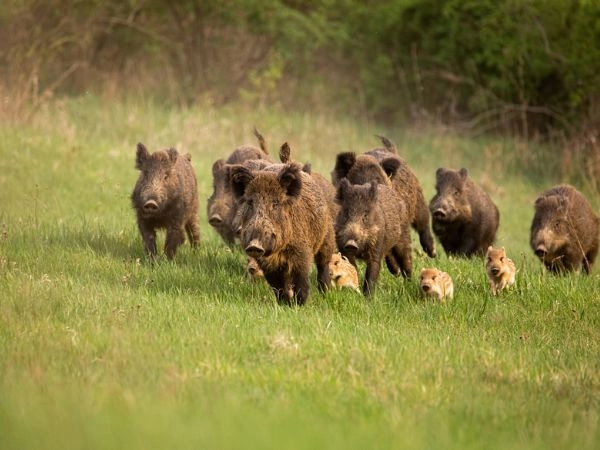
But above all, you need something you cannot buy: patience. The first outings often pass without firing a shot. Then comes a rustle, a shadow crossing the brush, the heartbeat accelerating—and in that moment you realize you are not there only for the shot.
Wild boar hunting as a community
Starting wild boar hunting means entering an ancient community made of men, women, dogs, stories, and shared silences. It is a school of humility, discipline, and respect. A form of hunting that teaches you your place, how to read the forest, and how to recognize yourself as a temporary guest of nature.
Perhaps that is its secret. Wild boar hunting never grows old because it is never the same. The forest changes, the wind changes, the people change. And when, at the end of the day, someone smiles and says, “Only the dog saw it,” you realize the true trophy is not always what falls to the ground.
Sometimes it is simply having been there.
Tips & tricks from a Tuscan houndsman: lessons learned over a lifetime in the forest
The story of Giorgio G.
“I entered the forest as a boy, and I never really left. I’ve seen guns change, dogs change, laws change, seasons change. The boar hasn’t changed. He’s always been the same: clever, suspicious, dangerous when he needs to be. And if you want to hunt him seriously, there are things no course will teach you.
You don’t ‘look’ for the boar—you wait for him
The first mistake young hunters make is doing too much. They walk, talk, check their phones, move as if the forest were a park. The boar hears you before you even think of him. Stay still. Listen. Learn the difference between a branch broken by a real step and a leaf moved by the wind. The forest speaks softly. Make noise and it tells you nothing.
Trust the dogs, not your ego
I’ve seen men convinced they knew more than the dogs. All of them were wrong. Dogs feel, see, and think in a language that is not ours. If a dog circles wide, slows down, or turns back, there is always a reason. The boar is not where you want him to be. He is where the dog tells you he is.
Old rule: when the dog insists, the boar is close. When the dog goes silent, you stay twice as quiet.
Don’t rush the shot
The boar that bursts out hits your stomach before your brain. But those who shoot on instinct without seeing clearly make mistakes—or worse. A good shot is one you can explain afterward, not one that “just went off.”
I’ve let more boars walk away than I’ve ever shot. And I’ve never regretted it.
Learn to work as a team—even when you don’t feel like it
A driven hunt is not a competition. It’s teamwork. If you don’t respect the hunt leader, the dogs, and your companions, sooner or later something goes wrong. The forest does not forgive. One person may take the boar, but everyone makes the hunt work.
The wind matters more than the rifle
I’ve seen hunters with incredible rifles go home empty-handed because they ignored the wind. The boar lives by his nose. If he smells you, you won’t see him. Stop before entering the forest. Feel the air. Watch the leaves. Toss a bit of dust. The wind tells you where you can stand—and where you cannot.
Old boars don’t think like young ones
Young boars run. Old ones think. They fake, circle, wait. Sometimes they let you pass and slip away quietly. The big ones rarely run blindly. Understand that, and you truly start hunting.
Always respect the animal
Without rhetoric: the boar is serious game. Strong. Capable of hurting you. Never underestimate him—alive or down. Approach carefully. If something feels wrong, stop.
Respect is not fear. It is intelligence.
And remember why you are there
Not only to shoot. You are there for the forest, the dogs, the company, the breakfast at dawn that tastes of bread, wine, and cold air. You are part of something that existed before you and, if you do things right, will exist after you.
One last thing from an old houndsman: if you come home tired but happy—even without firing—you have truly hunted.”
Reading the forest before the drive: the work that begins when everything is silent
A driven hunt does not begin when the dogs are released. It begins much earlier, when the forest is still and the air smells of night. That is when those who truly understand this hunt stop talking and start observing. It is not romantic intuition—it is craft.
At dawn, the forest looks the same only to those who cannot read it. To others, every moved leaf, patch of dark soil, and broken branch tells a story. The first task is not to look for the boar but to understand why he would be there: where he finds cover, where he can detect danger, where he has escape routes.
Boars never choose randomly. They rest where they feel safe, where they can move unseen and keep the wind in their favor. Before entering, experienced hunters stop, feel the air, watch the treetops. The wind decides everything: where the animal beds and how it will escape once the dogs apply pressure.
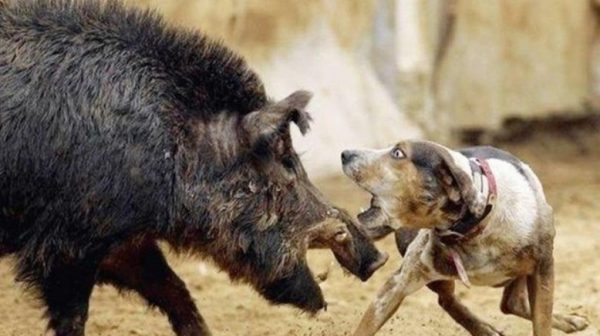
Then come the signs—not perfect tracks but subtle clues: churned soil under oaks, low rub marks on trunks, habitual passages. Fresh droppings still moist suggest recent presence; dry ones tell of an older visit. Good drives are built on fresh signs, not memories.
The heart of it all is the bedding area—not a single point but a complex zone offering protection and multiple exits. Once identified, the next step is not thinking where the boar will appear but where it will want to go. Boars choose the easiest, most covered routes. They avoid open ground when a ditch offers concealment; they descend rather than climb when possible.
Stands are placed by reading the forest like an invisible map—not for comfort but necessity. Those who misjudge blame luck; those who succeed know it is observation.
Another overlooked element is silence before the chaos. Many drives fail before they begin: slammed doors, loud voices, unnecessary movement. The forest records everything. The boar listens, decides, and may slip away long before the dogs are released.
Then come the dogs—the true interpreters of the forest. They do more than find game; they confirm or contradict human assumptions. A dog circling wide signals movement; one that hesitates or changes voice says clearly: the boar is here. Those who listen to dogs rarely choose the wrong place.
Reading the forest is not guessing—it is accepting that each day may surprise you. Perfectly planned drives may produce nothing, while imperfect ones bring unexpected encounters. But even empty days teach lessons to those who listen.
When everything works, when the boar emerges exactly where you predicted, there is no celebration—only a quiet smile and the shared awareness of a job well done. Meeting a boar may be luck. Meeting him where you expected is skill.