
Fishing in Mozambique is not an activity to schedule down to the minute. It is an experience to be lived, one that requires an open mind and the ability to adapt.
Here, the Indian Ocean is never just a decorative backdrop: it is a constant, powerful presence, at times disconcerting. Its warm, deep waters hold extraordinary biodiversity and offer one of the most fascinating settings in the world for offshore and coastal sport fishing.
Mozambique is a land that does not reveal itself immediately. It must be understood, respected, and crossed with care. And precisely for this reason, it offers authentic fishing experiences, far from standardization and the most crowded routes.
Mozambique and Fishing: A Still Wild Paradise
Facing the Indian Ocean with over 2,400 kilometers of coastline, Mozambique represents one of the last great unspoiled territories of African fishing. Here, ocean currents, rich seabeds, and low fishing pressure create ideal conditions for an impressive variety of pelagic and coastal species.
Unlike other more well-known destinations, Mozambique still preserves an authentic character. Fishing is not industrialized, not sensationalized. It is an activity carried out in balance with the environment, often far from major infrastructure, in natural settings of rare beauty.
The Indian Ocean: Warm, Powerful, Unpredictable
The Indian Ocean that washes Mozambique’s shores is very different from the “colder” oceans of the southern world. Here the water is warm, deep, and full of life. Currents bring nutrients, attracting large predators and creating a dynamic ecosystem in constant movement.
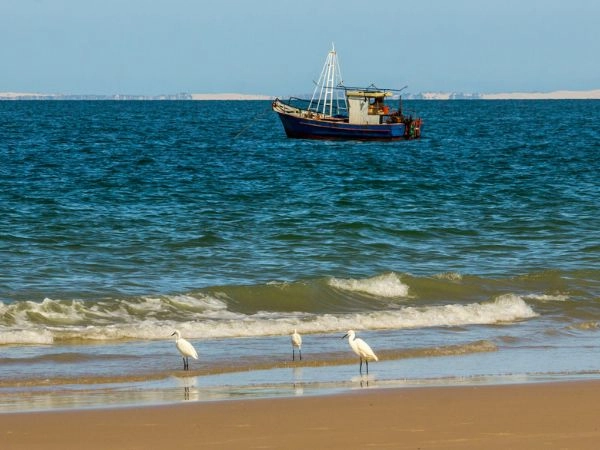
For the angler, this means confronting a living sea that changes rapidly. Conditions can shift within just a few hours. Wind, tide, and light influence every outing. There are no identical days. Every fishing trip is a story of its own.
Offshore Fishing in Mozambique: Meeting the Great Predators
One of the reasons fishing in Mozambique is so sought after is the presence of large oceanic predators. Offshore waters host iconic, powerful species capable of long, spectacular fights.
Here, offshore fishing is not only a technical matter. It is a test of endurance, coordination, and clarity. When a great predator strikes, everything focuses on that moment: the sound of the reel, the tension of the line, the movement of the boat on the swell.
It is not about dominating the fish, but about managing the encounter, respecting the timing and strength of an animal that lives in an environment infinitely larger than we are.
Coastal Fishing: Technique, Observation, Patience
Alongside offshore fishing, Mozambique offers extraordinary opportunities for coastal and inshore fishing. Here, the angler must change approach: less power, more environmental reading.
Coral reefs, shoals, lagoons, and shallow waters host an incredible variety of species. Fishing becomes an exercise in observation: understanding where fish move, how they react to light, how they use the currents.
It is quieter, more subtle fishing, yet no less intense. Every catch is the result of a correct choice, not chance.
Species and Biodiversity: An Extraordinary Ecosystem
One of the aspects that makes fishing in Mozambique unique is its biological richness. The meeting of warm waters, varied seabeds, and low human pressure creates an ideal habitat for countless species.
The angler who arrives in Mozambique is not looking for a single target. They seek the experience of a sea that can surprise at any moment. Here, every outing is potentially different from the previous one, and this unpredictability is part of its charm.
Fishing in Mozambique: A Matter of Respect
Mozambique quickly teaches a fundamental lesson: the ocean must not be forced. It must be listened to. Fishing here is sustainable out of necessity before it is by choice. Many local communities live in balance with the sea, and this is reflected in the approach to sport fishing.
Catch & release is not an imported trend, but a natural practice when one is aware of the ecosystem’s value. Releasing a large fish after a demanding fight is not a renunciation, but a gesture of respect toward an environment that continues to give precisely because it is not overexploited.
The Value of the Journey: Beyond Fishing
A fishing trip to Mozambique does not end on the water. It is also an encounter with a harsh and fascinating land, with different rhythms, with nature that is never domesticated. It is contact with a lesser-told Africa, far from mainstream tourist circuits, authentic.
Days unfold following the rhythm of the sea. Evenings carry a different kind of silence, broken only by the wind or the distant sound of waves. It is in these moments that fishing stops being an activity and becomes a travel experience.
Why Mozambique Is a Destination for Conscious Anglers
Mozambique is not a destination for those seeking guaranteed results or absolute comfort. It is for those who accept uncertainty, for those who see fishing as a fair confrontation with nature.
Here you learn:
-
to wait
-
to observe
-
to scale down expectations
And it is precisely this that makes the experience so intense. Returning home from Mozambique means carrying not only fishing memories, but a different way of looking at the sea.
Fishing and Identity: What Remains After Returning
Those who return from a fishing trip to Mozambique often speak less about the catches and more about the sensations. The color of the water. The warmth of the air. The strength of the ocean. The awareness of having been guests, not protagonists.
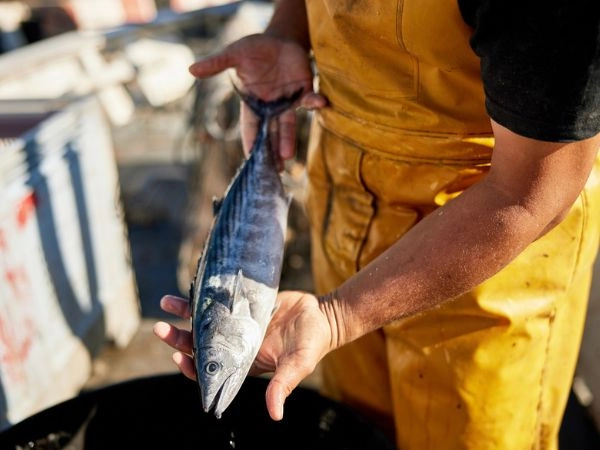
It is fishing that leaves a mark because it forces you to shift the center of the experience. You are not at the center. The environment is. And in this inversion lies the true value of the journey.
Mozambique as a Lesson of the Sea
Fishing in Mozambique is one of the purest expressions of modern fishing understood as experience. It promises no certainties, but offers intensity. It guarantees no results, but leaves deep traces.
It is a journey for those who seek the essence of the sea, for those willing to question themselves, for those who know that true success is not what you keep, but what you learn.
And when you return, with skin still marked by the sun and your mind full of images, you realize that Mozambique has not simply given you a fishing trip.
It has taught you a different way of being on the water.
Returning from Mozambique: The Story of Jack B.
I have been back for a few days, yet I still carry the rhythm of the ocean with me.
Not the precise memory of a catch, not a single isolated image. Rather a continuous sensation, like an echo that does not fade. Mozambique does not leave you when you board the plane. It follows you. It changes the way you look at the sea even when you return home.
Fishing in Mozambique, as I experienced it with Montefeltro, was never about expectations. From the very first day I understood that I was not there to “obtain” something. I was there to be present, to adapt to an environment that has no interest in pleasing you.
I clearly remember the first morning. The air was already warm, the ocean calm only in appearance. The water had that color you cannot quite define, a deep tone that immediately makes you understand that beneath the surface there is life—plenty of it. But also distance. The Indian Ocean in Mozambique is not immediate, not friendly. It is vast, powerful, indifferent.
And that indifference was the first lesson.
Every outing at sea began long before casting a line. Observing the wind, the currents, the way the water changed color. Here, fishing is never automatic. You cannot rely solely on technique. You must read the environment, accept that not everything is under your control.
When the fish struck, you felt it immediately. There was no room for doubt. The response was sharp, physical. The fight was not only with the animal, but with everything around it: the moving boat, the beating sun, the constant tension. Every mistake has a cost. Every decision matters.
But what struck me most was not the strength of the fish. It was the way that, afterward, everything immediately returned to normal. No emphasis. No triumph. The sea simply continued being the sea. As if nothing had happened.
The release was a natural gesture. I never felt I was giving something up. On the contrary. In that moment I understood that keeping the fish would have broken the balance of what I had just experienced. I watched it swim away, disappearing into that immense water, and I felt a deep calm. A rare sensation.
In the following days I realized that Mozambique works on you most in the empty moments. When you are not fishing. When the sea is too rough. When you remain watching the horizon without doing anything. It is there that you truly begin to slow down. To stop measuring everything in terms of results.
With Montefeltro I never felt pressure. No “today we must.” No performance anxiety. There was respect for the sea, for its timing, for what it was willing to offer. That made all the difference. It allowed me to live the journey without the frustration of having to prove something.
Returning home, I realized I spoke little about the fishing sessions and much about the sensations. The warmth of the air. The sound of water against the boat. The sudden silence in the evening, when the ocean finally seemed to slow down.
Mozambique taught me that fishing can be a form of listening. That you are not always there to take, but to understand. To resize yourself. To remember that you are a guest in a system far greater than you.
I know this experience will stay with me for a long time. Not as a story to tell, but as a different way of being on the water. More attentive. More patient. More respectful.
And perhaps this is the true sign of a great fishing journey: when you return home with fewer certainties, but with a deeper awareness.