

There are debates held at the bar, others on the shooting range, and still others in the emotional memory of those who grew up breathing hunting in their family. The .308 Winchester and the .30-06 Springfield belong to this last category.
They are not just calibers: they are icons, tools that have written important chapters in hunting and military history. And, inevitably, the question arises… which one is better?
Those who began hunting following their grandfather through Italian woods often inherit a reverence for the .30-06. A caliber that accompanied American soldiers in two world wars, a piece of history that proved its robustness, power, and reliability. In certain circles, speaking ill of it is almost sacrilegious.
On the other hand, the .308 Winchester has more recent roots but a formidable reputation: precise, modern, efficient. It has become the standard for marksmen, police forces, armies, and demanding hunters. It carries an aura of technical rationality that appeals to the pragmatic.
Today, we will look at these two legendary cartridges without romanticism. Only data. Only field experience. Only what truly matters when facing a deer or a wild boar breaking through the forest.
The .30-06 Springfield: tradition, power, and versatility
The name says it all: .30 caliber, year 1906. It was born for military needs at a time when a powerful bullet was required, capable of long-range impact and sufficient energy to stop real threats. Its evolution in hunting was natural: its initial push was already impressive, and with modern powders, the .30-06 continues to amaze.
With current ammunition, a 178-grain load can leave the barrel at around 2,750 fps. If the scope is zeroed at 200 meters, the drop at 500 meters remains “manageable,” and the terminal energy is more than enough for large European game.
It’s the classic Swiss army knife of big-game hunting. Perhaps not always the most refined, but certainly one that works… every time.
The .308 Winchester: modern efficiency and surgical precision
The .308 Winchester was developed in the 1950s as a compact alternative to the .30-06. The goal was simple: similar performance, lighter rifles, shorter actions, and easier recoil management. Mission accomplished.
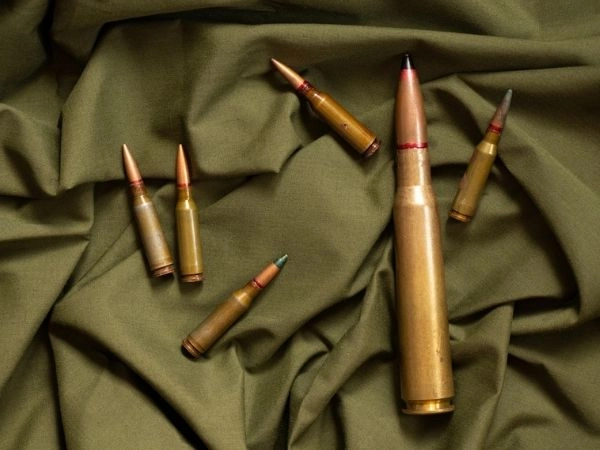
Its military use (as the 7.62×51 NATO) made it a worldwide standard. Snipers, European police forces, and selective hunters all appreciate the .308’s precision and predictable ballistics.
A modern 178-grain round travels at around 2,600 fps, with similar bullet drop to the .30-06 but a more manageable recoil and better stability in repeated shots. In certain contexts, this makes all the difference.
Field comparison
If we simplify:
The .308 Winchester has a softer perceived recoil, often superior accuracy in modern rifles, sufficient terminal energy for all European game, a huge global selection of rifles, and is ideal for controlled shooting and hunting general game.
The .30-06 Springfield has a stronger recoil, very good accuracy depending on the bullet, higher terminal energy, especially with 180–220 grain bullets, an equally wide selection of rifles, and is ideal for larger game hunting.
In the practice of Italian hunting — at distances within 300 meters and for game such as roe deer, fallow deer, red deer, and wild boar — both perform excellently.
And then there’s the 6.5×55 SE, the elegant cousin
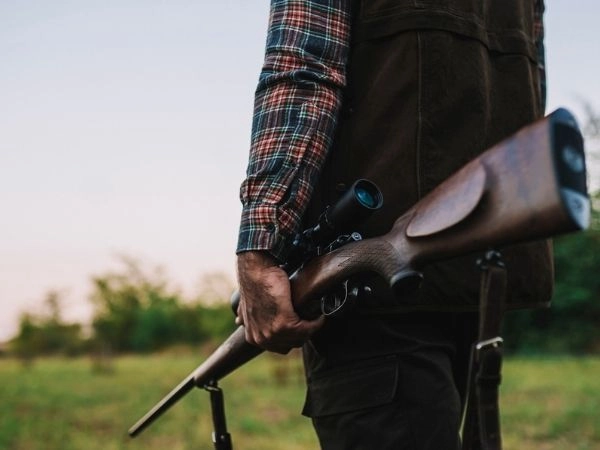
If the .308 and .30-06 are two robust brothers, the 6.5×55 SE (Swedish Mauser) is the refined cousin. Born in the late 19th century (1894) through Norwegian-Swedish collaboration, it served as a military cartridge, and did so so well that it has survived over 125 years almost unchanged.
Curious, isn’t it? In a world where every five years a “revolutionary new caliber” appears, this old Nordic round continues to captivate hunters and marksmen.
Why?
-
The 6.5mm bullet is naturally efficient, with extremely high ballistic coefficients for its diameter.
-
Recoil is soft, even lighter than the .308.
-
Trajectory, especially with 120–140 grain bullets, is impressively flat.
-
On game… it works with elegance: penetration is effective, energy retained, and meat is minimally damaged.
It was, for decades, the preferred caliber in Sweden for moose hunting. Yes, moose. With a 6.5.
This should make everyone arguing at the range about which caliber “drops a wild boar better at 80 meters” think twice.
A final reflection
After reading numbers, histories, and field differences, one question remains: who wins?
The answer is simpler than expected.
-
Want power, history, and total versatility?
.30-06 Springfield -
Want precision, perfect recoil management, and modern universality?
.308 Winchester -
Want ballistic efficiency, finesse, easy shooting, and surprising results?
6.5×55 SE
Three cartridges, three philosophies.
And perhaps that’s the beauty of it.
Because when the morning light illuminates the forest mist and the game appears among the trees, it’s not the cartridge that decides.
It’s you. Your breath. Your calm. Your experience.
The ammunition? Just a tool.
The hunter… the true one… knows that the difference is made by the finger on the trigger.
Recommended hunting ammunition in Europe
A common mistake is thinking that once the caliber is chosen, the rest is secondary. In reality, bullet choice matters as much (if not more) than caliber itself. Bullet type, weight, construction, and velocity determine penetration, energy transfer, and tissue behavior.
Here is a thoughtful selection, without extremes.
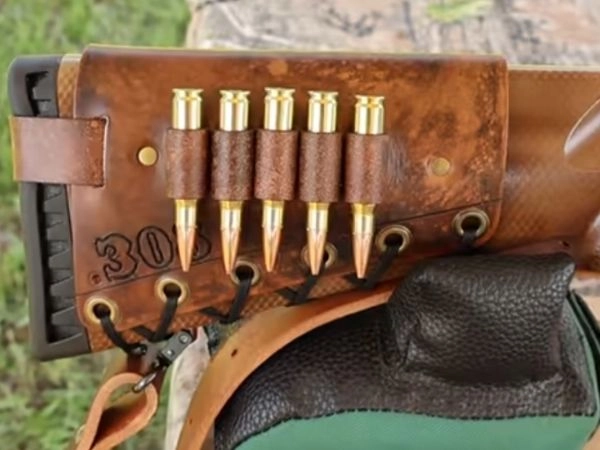
.308 Winchester
-
RWS Evo Green 159 gr → ideal for selective hunting within 200 meters. Rapid expansion, impeccable precision. Perfect for roe deer and fallow deer.
-
Hornady Precision Hunter ELD-X 178 gr → modern choice for longer shots. Maintains integrity at medium-long range, extremely consistent.
-
Norma Oryx 165 gr → European classic. Deep penetration, controlled behavior on strong wild boar.
.30-06 Springfield
-
Federal Trophy Bonded Tip 180 gr → powerful, durable, perfect for larger game: deer, moose, adult wild boar.
-
Sako Hammerhead 180 gr → historic round for woods and short distances. Solid impact, safe, reliable.
-
Hornady Interlock 150 gr → softer setup, balanced choice within 250 m shots.
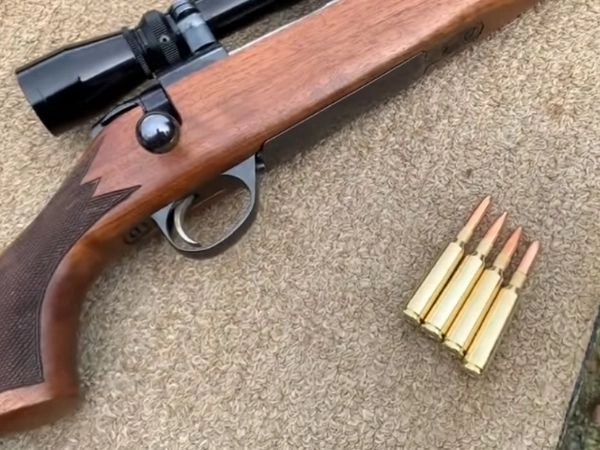
6.5×55 SE
-
Norma Vulkan 156 gr → traditional Scandinavian choice. Lethal on medium-large game with minimal recoil.
-
Hornady ELD-X 143 gr → perfect for technical shooting and precision beyond 300 meters.
-
RWS KS 140 gr → balanced bullet for European game. Controlled penetration and expansion.
The art of handloading: advantages and considerations
Those who handload know that these three calibers have different personalities.
-
.308 Winchester is probably one of the easiest calibers to reload worldwide. Forgiving of small mistakes, responds well to many powders, produces consistent results. Ideal for optimizing precision and cost.
-
.30-06 Springfield, with its larger case volume, requires more attention to powder choice. When combined correctly, it delivers excellent performance with heavier bullets.
-
6.5×55 SE is almost poetic in reloading: loves slow powders, controlled pressures, and tight tolerances. Those seeking maximum long-range precision often end up here.
Anyone chasing the perfect load knows this: before worrying about velocity, you seek consistency. And that often matters more than 100 fps extra.
Which scope to pair? A practical tip
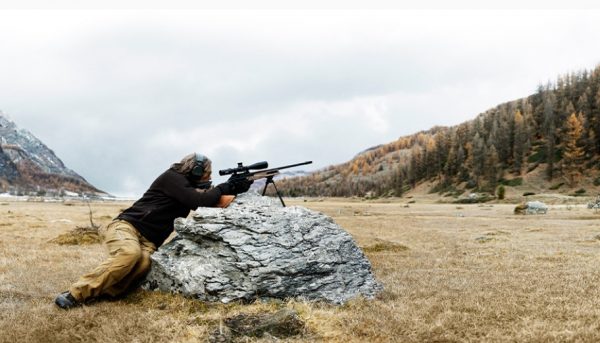
Caliber defines potential. The optic unlocks its real use.
-
.308 Winchester: ideal with 2–12×50 or 3–18×50. Pure versatility: woods, fields, long range.
-
.30-06 Springfield: works well with brighter, robust optics, especially for big game. A 1.7–13×42 or 2.5–15×56 is wise.
-
6.5×55 SE: for precision, a ballistic turret and 4–16×50 or 5–25×56 glass turns the caliber into a scalpel.
A note many expert hunters agree on:
“You don’t need to magnify what you already see. You need to distinguish what you haven’t seen yet.”
The final choice: a pact between style and function
After analyzing history, performance, ballistics, and practical use, one question is inevitable: what do you want to do in the field?
-
Want a modern, predictable cartridge with global availability and excellent precision? → .308 Winchester is a reliable companion.
-
Want a historic, powerful round, capable of handling any scenario from the Scottish moors to North American woods? → .30-06 Springfield remains a benchmark.
-
Want ballistic efficiency, softness, precision, and a Scandinavian charm that stands the test of time? → 6.5×55 SE is more than a technical choice: it’s a cultural statement.
And perhaps the simplest truth is this:
The caliber doesn’t choose the hunter.
The hunter chooses the caliber that best represents how they want to experience hunting.